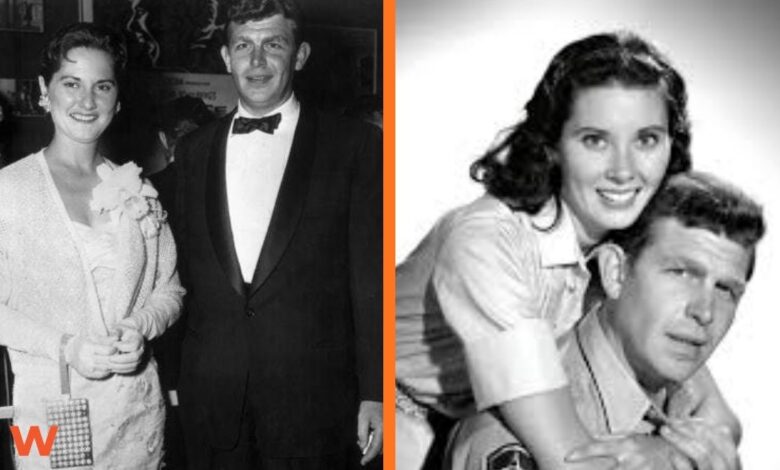
Barbara Bray Edwards is most often remembered as Andy Griffith’s first wife, but that description only tells part of her story. She was also a performer, a university-era creative partner, a mother through adoption, and a woman who shared the formative years of Griffith’s rise before stepping back from public attention. Because her life was never documented as heavily as her famous former husband’s, many modern readers search for the same questions: who was Barbara Bray Edwards, what role did she play in Andy Griffith’s life, and what is actually known about her background, marriage, family, and later years? The verified record is smaller than many celebrity biographies, but it is still meaningful when brought together carefully. Barbara’s story matters because it sits at the intersection of personal history and entertainment history. She knew Andy Griffith before he became a television icon, worked with him in performance settings tied to North Carolina’s theater tradition, and helped shape the family life that existed behind his public career. Later reporting also confirms details that many older fan sites only hinted at, including the fact that the couple adopted two children, that Barbara made a small on-screen appearance connected to Griffith’s television world, and that she remarried after their divorce. What emerges is not a glamorous tabloid tale, but a grounded and informative portrait of a woman whose life deserves more than a passing footnote.
Quick Information Table
| Data Point | Details |
|---|---|
| Full name | Barbara Bray Edwards |
| Later name | Barbara Bray Edwards St. Clair |
| Birth year | 1926 |
| Birth date often listed | August 17, 1926 |
| Death date | July 23, 1980 |
| Age at death | 53 |
| Known for | First wife of Andy Griffith |
| Occupation | Performer / actress |
| University connection | Studied with Andy Griffith at the University of North Carolina at Chapel Hill |
| First marriage | Married Andy Griffith on August 22, 1949 |
| Children | Adopted two children: Andy “Sam” Griffith Jr. and Dixie Griffith |
| Divorce | Divorced Andy Griffith in 1972 |
| Second marriage | Married Michael St. Clair in 1975 |
The public record on Barbara Bray Edwards is limited, so the table reflects the strongest consistently reported details rather than unsupported online claims.
Who Was Barbara Bray Edwards?
Barbara Bray Edwards was a performer best known today as the first wife of actor Andy Griffith. She belonged to the chapter of his life that came before national television stardom, when both were still developing as young artists and building a future around music, drama, and regional performance. Modern reporting identifies her not just as a spouse, but as a fellow performer who met Griffith while both were studying drama and music at the University of North Carolina at Chapel Hill in the 1940s. That detail is important because it places Barbara inside the creative environment that shaped Griffith’s early career rather than outside it.
She also participated in The Lost Colony, the long-running outdoor drama on North Carolina’s Outer Banks. According to later reporting that cited historical coverage from The Coastland Times, Griffith played Sir Walter Raleigh while Barbara Edwards performed as Eleanor Dare. Their eventual wedding location at the Little Chapel on the Fort Raleigh National Historic Site on Roanoke Island echoed that shared stage history. This kind of detail gives Barbara Bray Edwards a stronger identity than many brief celebrity biographies allow. She was not simply standing next to an actor who later became famous. She was part of the artistic world in which he was coming of age.
Early Life and Background
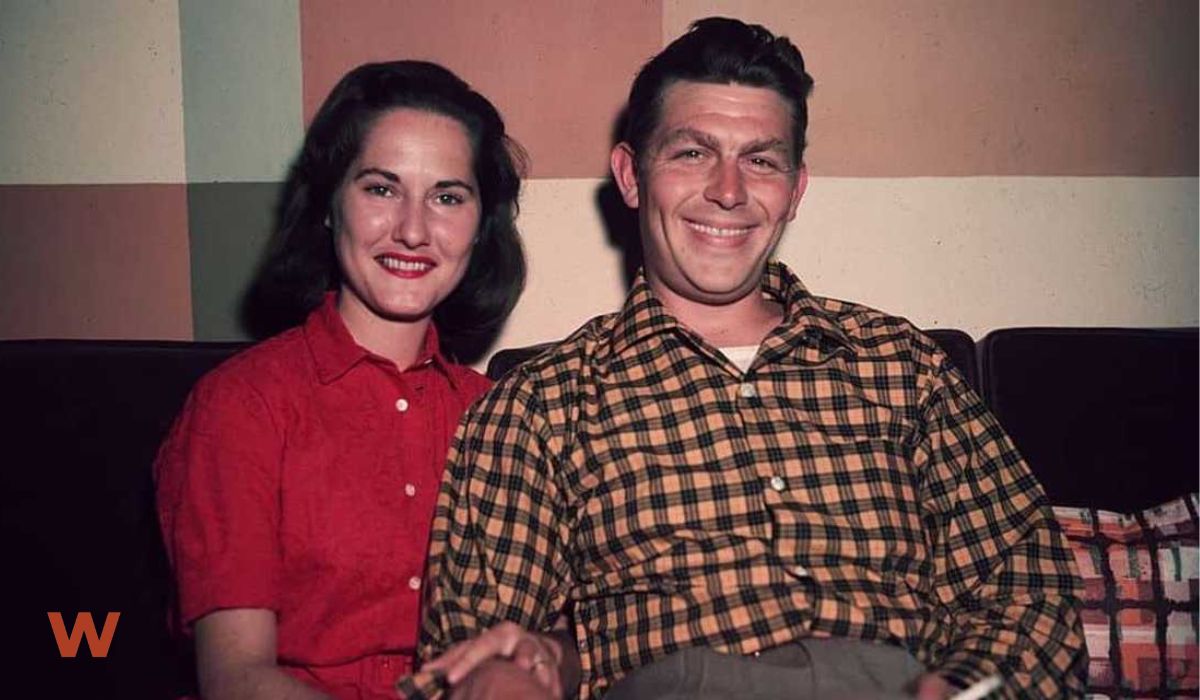
The biggest challenge in writing accurately about Barbara Bray Edwards is that her early life is not richly documented in widely available authoritative sources. Public profiles consistently identify her birth year as 1926, and memorial-style records commonly list the date as August 17, 1926, with her death on July 23, 1980. Beyond that, however, solid mainstream sourcing about her birthplace, childhood home, parents, siblings, and early schooling is sparse. A careful article should say that directly rather than repeating speculative family details that circulate on low-quality celebrity sites.
What can be said with more confidence is that Barbara came into public view through music and drama, and that her relationship with Andy Griffith grew out of that shared educational and theatrical setting. In other words, her background appears closely tied to performance, college arts culture, and the stage rather than to the later Hollywood machinery that audiences associate with Griffith’s name. That distinction matters. It explains why Barbara’s story feels rooted in a more regional, pre-fame American entertainment world, especially one linked to North Carolina’s cultural institutions. There is no strong, easily citable mainstream source that fully maps her parents, siblings, or extended family biography. So while readers often search for “Barbara Bray Edwards father,” “mother,” or “siblings,” the most honest answer is that the public record remains thin. That absence should not be filled with invention. In biographical writing, especially for less-documented women attached to famous men, restraint is part of credibility.
Education and Creative Development
One of the clearest and most useful verified facts about Barbara Bray Edwards is her academic and artistic connection to the University of North Carolina at Chapel Hill. She and Andy Griffith met there while studying drama and music, which suggests that Barbara was not only socially connected to Griffith but intellectually and creatively aligned with him at a formative stage. This gives her biography real texture. She belonged to the same performance-oriented educational space that helped launch Griffith’s early ambitions.
This university connection also helps explain their later work in performance circles, including The Lost Colony. Both were building a life around acting, stage work, and entertainment before Griffith became a national figure. Later family coverage says the couple even toured regionally as an act in their early married years. That detail is especially revealing because it shows Barbara as an active participant in the couple’s artistic life, not merely a passive observer of Griffith’s success. Their early marriage appears to have been a true partnership in the practical sense as well as the romantic one. A notable and lesser-known detail preserved through later reporting is that Barbara once described an agreement between them: whichever partner first broke through in show business would focus on the career, while the other would help stabilize home life. This is one of the most informative insights into Barbara Bray Edwards because it shows strategic thinking, realism, and sacrifice inside the marriage. Griffith eventually became the breakout success, and Barbara appears to have honored that arrangement.
Marriage to Andy Griffith
Barbara Bray Edwards married Andy Griffith on August 22, 1949. The marriage took place at the Little Chapel on the Fort Raleigh National Historic Site on Roanoke Island, a location connected to their earlier work in The Lost Colony. That choice made the wedding more than ceremonial. It tied their union to the place where they had shared artistic purpose and personal connection. Later summaries sometimes reduce the marriage to a date and divorce line, but the fuller story suggests a relationship built on common interests, stage experience, and mutual ambition.
Their marriage lasted for about 23 years, ending in divorce in 1972. By any measure, that was a substantial relationship, especially because it covered the period in which Griffith transformed from a promising performer into a nationally recognized star. Barbara therefore experienced not only the private dimensions of marriage, but also the major changes that accompany fame, relocation, career pressure, and public expectation. Although detailed firsthand commentary from Barbara herself is limited, the structure of their shared history makes clear that she lived beside Griffith during the years that built his public legacy. Their union also appears to have remained grounded in practical family organization. One later account notes that Barbara managed the home and even handled Griffith’s fan mail while raising their son during the late 1950s. This may seem like a small detail, but it adds something newly informative to her portrait: Barbara was performing invisible labor that helped sustain a growing celebrity household. That kind of work rarely receives proper historical credit.
Children and Family Life
Barbara Bray Edwards and Andy Griffith adopted two children, a son and a daughter: Andy “Sam” Griffith Jr., born in December 1957, and Dixie Griffith, born in September 1959. These family details are consistently confirmed in modern reporting and are central to Barbara’s biography. Her role as a mother is not incidental; it sits at the center of the life she appears to have built after the couple’s early performing years.
Family reporting adds several details that make this chapter of her life more vivid. Barbara reportedly stepped back from acting responsibilities to focus on home life and correspondence connected to Griffith’s growing fame. The family lived between California and the Outer Banks of North Carolina, reflecting Griffith’s work commitments and the family’s ties to the region where both he and Barbara had early theatrical roots. This back-and-forth life would have required adaptability, especially with young children in the household. The later public stories of their children also keep Barbara connected to Griffith’s broader legacy. Sam Griffith grew up largely out of the spotlight, later worked in real estate, and died in 1996 at age 38. Dixie Griffith chose a more private route than many celebrity children, later settling in Colorado, raising three daughters, and participating in projects that honor her father’s memory. While most of the later press naturally centers on Andy Griffith, those stories also reflect Barbara’s role in building the family that survived the marriage.
Career, Screen Credit, and Public Presence
Barbara Bray Edwards is often described simply as an actress, though the surviving record suggests her public career was modest and intermittently documented. IMDb identifies her as known for The Andy Griffith Show and The Sam Levenson Show, and People reports that she made a cameo appearance as a choir member in one episode of The Andy Griffith Show during the fourth season. That brief screen credit is a valuable detail because it shows she was not entirely absent from the entertainment record after Griffith’s rise.
Even so, Barbara does not seem to have pursued a long, aggressively public entertainment career under her own name. Instead, the evidence points toward a shift from shared performance life into family-centered support work. In SEO terms, many readers search for “Barbara Bray Edwards actress” or “Barbara Bray Edwards career,” and the most accurate response is that she did work in performance and television at a limited level, but she is remembered far more for her place in Andy Griffith’s life story than for an extensive independent filmography. That does not diminish her; it simply reflects the historical record as it exists.
Divorce, Second Marriage, and Later Years
Barbara Bray Edwards and Andy Griffith divorced in 1972. Publicly available mainstream sources do not offer a deeply detailed explanation of why the marriage ended, and responsible writing should avoid turning that silence into speculation. What can be said is that their divorce closed a long chapter that included university years, stage work, early marriage, parenthood, and Griffith’s ascent to fame. The relationship lasted long enough to leave a clear mark on both their biographies.
A detail that some readers may not know is that Barbara later remarried. Memorial records identify her second husband as Michael St. Clair, with their marriage taking place in 1975. This is important because it reminds readers that Barbara’s life did not end with her divorce from Griffith. She had a later chapter, even if the public documentation of it is comparatively light. In many celebrity-adjacent biographies, women disappear from view once the famous marriage ends. Barbara’s remarriage helps correct that flattening tendency. Barbara Bray Edwards died on July 23, 1980, at the age of 53, in Los Angeles according to later reporting and memorial records. Her death came decades before the modern internet biography boom, which partly explains why the surviving public record is fragmented. That gap has led many sites to recycle the same limited facts, but the strongest verified sources still allow a meaningful outline of her life.
Net Worth, Financial Life, and What Remains Unknown
Search behavior often pushes biography articles toward terms like “net worth,” “financial growth,” or “salary,” but in Barbara Bray Edwards’s case there is no strong authoritative public source that credibly documents her independent net worth. Because of that, a high-quality article should resist the temptation to invent a number just to satisfy a keyword pattern. Her financial life likely intersected with Griffith’s entertainment earnings during the marriage, but that is not the same as having a verified standalone valuation.
The same caution applies to several other biography subtopics. There is not enough reliable, mainstream evidence to confidently map Barbara’s parents’ names, detailed childhood biography, exact place of birth, or a full sibling list. That may disappoint readers who want a complete archive-style profile, but honesty is part of good biographical writing. In Barbara’s case, what remains unknown is just as important as what can be confirmed. It shows how easily women in supporting public roles can be blurred by history unless later sources preserve the record more fully.
Why Barbara Bray Edwards Still Matters
Barbara Bray Edwards still draws interest because she represents an important part of Andy Griffith’s personal history and an overlooked kind of mid-century American womanhood. She was educated, artistic, involved in stage culture, active in a shared performance life, then absorbed into the invisible labor of family stability while her husband became a household name. That arc is historically familiar, but rarely acknowledged with enough seriousness. Her biography opens a window into what it meant to build a life beside fame without fully entering it.
She also matters because her story enriches the wider Griffith narrative. Without Barbara, the public would know less about Griffith’s university years, his Lost Colony era, his early marriage, and the family life that ran parallel to his rise. She helped form the first domestic world around him, and the children they adopted remained part of his legacy long after the marriage ended. For readers seeking newly organized information rather than recycled celebrity trivia, that is what makes Barbara Bray Edwards worth remembering.
Conclusion
Barbara Bray Edwards was far more than a line in Andy Griffith’s biography. She was a fellow student of music and drama, a stage collaborator, a wife during his early rise, a mother, a brief screen presence, and a woman whose later life included remarriage and a separate identity beyond Griffith. The public record does not answer every question about her, and that limitation should be acknowledged rather than hidden. Still, the documented facts are strong enough to show a person of real substance and historical interest.
In the end, the story of Barbara Bray Edwards is compelling because it is both close to fame and partly outside it. She stood near one of television’s most beloved stars, yet her own life reflects quieter themes: shared beginnings, creative partnership, family sacrifice, and the way some lives survive in fragments rather than headlines. When those fragments are gathered carefully, Barbara emerges not as a footnote, but as an important part of Andy Griffith’s first chapter.
Frequently Asked Questions
1. Who was Barbara Bray Edwards?
Barbara Bray Edwards was the first wife of Andy Griffith. She was a performer associated with music, drama, and stage work, and she met Griffith while both were studying at the University of North Carolina at Chapel Hill. She later became the mother of their two adopted children and remained part of Griffith’s early life story even after their divorce.
2. When did Barbara Bray Edwards marry Andy Griffith?
Barbara Bray Edwards married Andy Griffith on August 22, 1949. Their wedding took place at the Little Chapel on the Fort Raleigh National Historic Site on Roanoke Island, a location tied to their involvement in The Lost Colony.
3. Did Barbara Bray Edwards have children?
Yes. Barbara Bray Edwards and Andy Griffith adopted two children: Andy “Sam” Griffith Jr. and Dixie Griffith. Sam was born in December 1957, and Dixie was born in September 1959.
4. What was Barbara Bray Edwards known for besides marriage?
Besides being known as Andy Griffith’s first wife, Barbara was a performer and actress. She worked in the artistic circles where Griffith developed his career, participated in The Lost Colony, and later made a cameo appearance on The Andy Griffith Show.
5. Did Barbara Bray Edwards remarry?
Yes. After divorcing Andy Griffith in 1972, Barbara later married Michael St. Clair in 1975, according to memorial records.
6. When did Barbara Bray Edwards die?
Barbara Bray Edwards died on July 23, 1980, at the age of 53. Later reporting and memorial records place her death in Los Angeles.
7. Is Barbara Bray Edwards’s full family background publicly known?
Not completely. Some widely searched details, such as her parents, siblings, and full childhood biography, are not well documented in strong mainstream public sources. The most reliable article is one that states clearly what is confirmed and what remains uncertain.