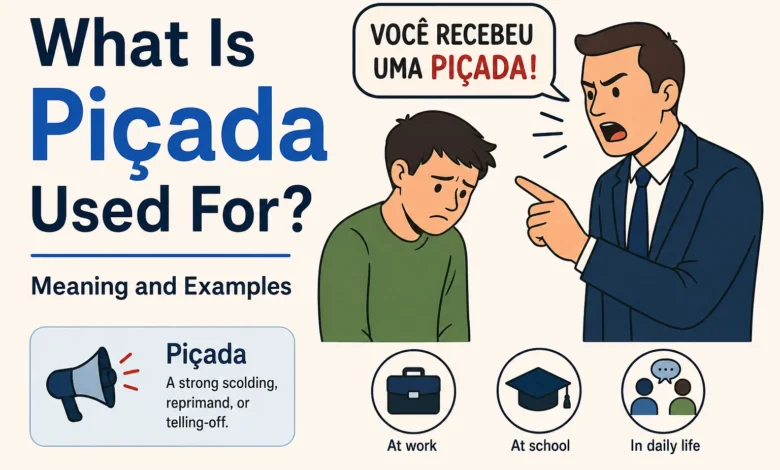
Piçada is a Portuguese word that can confuse new learners because it looks close to other words but carries a sharper and more informal tone. In common use, it is understood as slang for a strong scolding, a harsh reprimand, or a direct telling-off. It is not a gentle reminder or a neutral piece of advice. It usually suggests that someone has been corrected in a firm, uncomfortable, or embarrassing way. Because the word has a taboo and rough feel, it should not be used in polite, formal, or professional writing. It is better understood as a word people may hear in real speech rather than a term they should quickly copy. For English speakers, the simple meaning is close to “getting told off,” but the full sense depends on who says it, where it is said, and why the correction happens.
Understanding Piçada is useful because real language is not only about plain definitions. Words also carry mood, social setting, and hidden risk. A person may hear this term in a Portuguese conversation, see it in an online comment, or meet it while studying informal speech. Without context, it may be easy to confuse it with “picada,” a different and much more common word. With context, the meaning becomes clearer: someone did something wrong, someone else reacted strongly, and the speaker wants to describe that correction in a colorful way. This makes the word useful for understanding informal stories, workplace complaints, school situations, and social reactions. This article explains what the word means, how it is used, how it differs from similar words, and when it is better to choose safer language.
Core Meaning of Piçada
The main practical meaning of Piçada is a reprimand or scolding that feels strong rather than soft. A person might use it after being corrected by a boss, teacher, parent, coach, officer, or another person with authority. It can also be used between friends in a joking way, especially when someone is telling a story about a mistake. The word often carries a sense of impact. It tells the listener that the correction was not casual. Someone was unhappy, and the person being corrected noticed it. In English, possible translations include “scolding,” “reprimand,” “telling-off,” “dressing-down,” or “getting chewed out,” depending on the tone of the sentence.
There is also an important warning about the word’s register. Piçada is not a clean formal term. It is tied to slang and taboo language, so it can sound crude or unsuitable in many situations. That does not mean every speaker uses it with the same level of force, but it does mean learners should treat it carefully. If the goal is to sound respectful, use a safer option such as “repreensão,” “reprimenda,” “advertência,” “bronca,” “warning,” or “scolding.” These words can explain the same basic idea without the same rough edge and with less chance of sounding offensive. This matters when writing for a wide audience because some readers may understand the meaning but still react badly to the tone.
How Piçada Is Used in Sentences
Piçada is normally used as a noun, so it often appears with verbs that show giving or receiving a correction. A speaker may say that someone “took,” “received,” or “gave” a Piçada, depending on the sentence structure being used. The idea is usually linked to a mistake, a broken rule, a missed duty, or careless behavior. For example, a worker who arrives late several times may say they received a strong scolding from the manager. A student who ignores instructions may be corrected by a teacher. A player who fails to follow a coach’s plan may hear a sharp warning after the game. In each case, the word points to a firm reaction, not a calm suggestion.
Common situations include: • a late employee being strongly corrected by a manager; • a student receiving a sharp warning after ignoring instructions; • a team member being firmly told off after missing an important task. These examples show the social shape of the word. There is usually a person who has authority, a person who made a mistake, and a correction that feels direct. The word can be serious or humorous depending on the speaker’s tone. If someone laughs while saying it, they may be describing a small embarrassing moment. If they sound upset, the same word may show real tension.
Meaning in English and Translation Choices
A good English translation of Piçada depends on the level of formality needed. “Scolding” is simple and clear. “Reprimand” is more formal and works well when the correction comes from an official role. “Telling-off” feels natural in everyday British English, while “getting chewed out” has a casual American feel. “Dressing-down” can also work when the correction is strong and direct. None of these translations is perfect because the Portuguese word has a slang color that may not transfer neatly. A translator should not only ask, “What does the word mean?” The better question is, “What feeling does this word create in this sentence?”
For example, if the sentence describes a supervisor speaking to an employee, “formal reprimand” or “strong warning” may be the best choice. If the sentence describes a friend joking about getting in trouble, “telling-off” may sound more natural. If the sentence describes a parent correcting a child, “scolding” may be enough. The same Portuguese word can lead to different English choices because English separates tone in different ways. This is why context is so important. A word-for-word translation may be correct on the surface but still feel wrong to a native reader if the tone is too formal, too soft, or too harsh.
Piçada vs. Picada
One of the most important points is that Piçada is not the same as “picada.” The spelling difference may look small, but the meaning can change completely. Piçada, with “ç,” is the informal word discussed in this article. Picada, with “c,” is a common Portuguese word with several everyday meanings. It can refer to a prick from a needle, a bite from an insect, a sting, a puncture, or something chopped or minced, depending on the context. In food writing, health advice, travel notes, and daily conversation, “picada” is much more likely to appear than Piçada. Mixing them up can make a sentence confusing or even unintentionally rude.
The marks in the word also matter for reading and pronunciation. In Portuguese, “ç” usually sounds like “s” before “a,” “o,” and “u.” The ending “ã” has a nasal sound that many English speakers need practice to say clearly. These details are not just decorative. They help readers know which word is meant. If you remove the mark or change the letter, the reader may think of the wrong word. This is especially important when writing for people who may already know “picada” from travel, food, insect bites, or medical topics. Careful spelling protects the meaning and helps the article stay clear, accurate, and easier for readers to trust.
Cultural Context and Tone
Slang often shows how people speak when they are relaxed, angry, amused, or telling a personal story. Piçada fits that pattern because it adds feeling to the idea of being corrected. A neutral sentence might say, “He received a warning.” A more colorful informal sentence might suggest that he received a Piçada. The second version feels stronger, more personal, and less formal. It may suggest embarrassment, frustration, or a memorable moment. This is why the word can be useful when explaining real conversation, but it is also why it must be handled with care. Strong words can make writing lively, but they can also make it sound careless if used in the wrong place.
Cultural setting matters because taboo slang is not judged the same way everywhere. Close friends may understand the word as funny or expressive, while strangers may find it rude. Some speakers may use it casually, while others may avoid it. Learners should be extra careful because using a local slang word without the right timing can sound forced or disrespectful. A good rule is to understand the word first and use it only when you are sure the group, tone, and setting allow it. In many cases, a safer word will do the job better. Knowing slang does not always mean using slang.
When to Avoid the Word
Piçada should be avoided in formal writing, business messages, customer support, school essays, official reports, job applications, public notices, and respectful conversations with people you do not know well. Even if you only mean “reprimand,” the slang tone may distract from your message. In professional settings, clear and neutral wording is usually stronger. Instead of saying someone received a Piçada, say they received a warning, correction, reprimand, or firm feedback. These choices keep the meaning clear without creating unnecessary discomfort. This is especially useful for a worldwide audience, because not every reader will understand the cultural background behind the word.
It is also better to avoid the word around children, elders, clients, or people who prefer polite language. Online, the risk is even higher because tone is easy to misread. A joke that works in a close group may look rude in a public comment. If you are explaining the word in an educational article, you can discuss it carefully, but you do not need to use it repeatedly. The safest writing style is simple: define it, explain its tone, give mild examples, and show better alternatives for serious situations. That approach helps readers learn the meaning without encouraging careless use.
Final Thoughts
Piçada is used to describe a strong scolding, reprimand, or telling-off in informal Portuguese. It can appear in stories about mistakes, discipline, authority, embarrassment, or firm correction. Still, it is not a neutral word. Its slang and taboo tone means it should be handled with care, especially by learners and writers addressing a broad audience. The word is useful to recognize because it may appear in casual speech and online discussion, but safer alternatives are often better when speaking politely or writing clearly. If you are building vocabulary, treat the term as part of real-life language rather than a word to use everywhere. It helps you understand tone, humor, frustration, and social pressure in Portuguese, but it also shows why context matters. The most important lessons are simple: understand the context, do not confuse it with “picada,” watch the tone, and choose the word that best fits the situation.
Frequently Asked Questions (FAQs)
What does Piçada mean?
Piçada usually means a strong scolding, reprimand, or telling-off in informal Portuguese. It describes a correction that feels direct and forceful, not a soft reminder or friendly suggestion.
Is Piçada a polite word?
No, it is not usually polite. It has a rough slang tone and may sound unsuitable in formal, professional, or respectful situations, even when the basic meaning is only “reprimand.”
Can Piçada be translated into English?
Yes, but the best translation depends on context. Common choices include “scolding,” “reprimand,” “telling-off,” “dressing-down,” or “getting chewed out,” with each option carrying a slightly different tone.
Is Piçada the same as Picada?
No, they are different words. “Picada” can mean a prick, bite, sting, puncture, or chopped food, while Piçada is informal slang linked to a harsh correction.
Where might someone hear Piçada?
Someone may hear it in casual Portuguese conversation, informal stories, online comments, or regional speech. It is most likely to appear when people talk about mistakes, warnings, discipline, or being corrected.
Should Portuguese learners use Piçada?
Learners should mainly understand it rather than use it often. Because it can sound crude or too informal, safer words are better unless you fully understand the setting and tone.