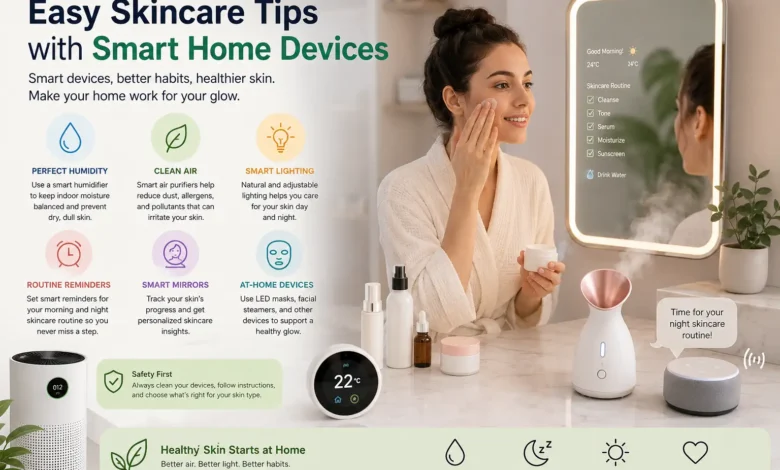
Smart home devices are no longer only for lights, speakers, cameras, and thermostats. They can also support a cleaner, calmer, and more consistent skin care routine at home. The real value is not in making skin care complicated. It is in making small daily habits easier to follow.
Good skin care still starts with the basics: cleansing, moisturizing, sun protection, sleep, and a healthy home environment. Devices can help you remember steps, control air quality, manage humidity, and build routines that fit your day.
This guide explains smart home devices skincare tips in a simple and useful way. You will learn how to use home technology without overdoing it, wasting money, or irritating your skin.
Table of Contents
ToggleHow Smart Home Devices Can Support Skin Care
Smart home devices can help your skin routine by creating better conditions around you. A humidifier can reduce the dry feeling caused by indoor heating or air conditioning. An air purifier can lower dust and tiny particles in the room. Smart lights can remind you when it is time to wind down.
These devices do not replace cleanser, moisturizer, or sunscreen. They support the habits that help those products work better. Think of them as quiet helpers in the background rather than miracle tools.
For example, dry indoor air may make your face feel tight or flaky. A smart humidifier can track moisture levels and turn on when the air gets too dry. This can be helpful in winter, in dry climates, or in rooms with constant cooling.
Smart speakers and phone-connected routines can also help people who forget steps. A simple reminder to wash your face, apply moisturizer, or use sunscreen can make a big difference over time.
Build a Simple Routine Before Adding Technology
Before buying any device, keep your skin routine simple. Too many products and too many gadgets can make it harder to know what is helping and what is causing irritation. Start with a gentle cleanser, a moisturizer that suits your skin, and sunscreen during the day.
A smart routine should feel easy. It should not take 45 minutes or require five different machines. Most people do better with a short plan they can repeat every morning and night.
A basic routine may look like this:
- Morning: cleanse, moisturize, apply sunscreen, and set a reminder to reapply if outdoors.
- Evening: cleanse, moisturize, and use any treatment product only as directed.
- Weekly: clean pillowcases, device surfaces, brushes, and humidifier parts.
- Monthly: review what is working and remove anything that causes stinging or redness.
Once the routine is stable, smart devices become more useful. They can help you stay consistent instead of adding stress. The goal is not a perfect routine. The goal is a routine your skin can handle every day.
Use Humidity, Air Quality, and Lighting the Smart Way
Humidity matters because skin can lose comfort when indoor air is too dry. A smart humidifier with a built-in sensor can help keep the room balanced. This is especially useful at night, when your skin has several hours to rest without makeup, pollution, or sun exposure.
Do not let the room become too damp. High moisture can encourage mold, dust mites, and musty air. A humidity monitor can help you avoid guessing. Clean the humidifier often, because dirty water tanks can spread unwanted germs into the air.
Air quality also plays a role in comfort. Dust, smoke, pet dander, and pollen can bother sensitive skin and eyes. A smart air purifier may help in bedrooms, small apartments, or homes near traffic. It works best when the filter fits the room size and is changed on time.
Smart lighting can support skin care in a different way. Bright light in the morning can help you wake up and follow your routine. Softer light at night can remind your body to slow down. This makes it easier to sleep, and better sleep often supports a fresher-looking face.
Bathroom lighting is also important. Very harsh light can make you over-check pores, lines, or small marks. Clear but gentle lighting helps you apply products properly without turning skin care into daily criticism.
Smart Reminders for Morning and Night Consistency
Many people do not fail at skin care because they lack products. They fail because they forget the small steps. Smart reminders can fix that problem without adding more products to the shelf.
You can set a morning reminder to apply sunscreen before leaving home. You can also set an evening reminder to remove makeup, wash your face, and moisturize. These small alerts are useful because skin care works best when repeated.
Smart speakers can help if your hands are busy. You can ask for a timer while using a face mask, LED mask, or cleansing device. This helps you avoid leaving products or devices on your skin for too long.
The best reminders are short and calm. A routine that feels like pressure will not last. Use simple labels such as “wash face,” “moisturize,” or “clean device.” Clear reminders are easier to follow than long instructions.
At-Home Beauty Devices: Helpful Tools, Not Magic Fixes
At-home beauty devices can be useful, but they should be chosen carefully. LED masks, cleansing brushes, facial steamers, cooling tools, and skin scanners all have different purposes. Some support comfort, while others claim to improve tone, texture, or fine lines.
LED masks are popular because they are easy to use and do not need recovery time when used correctly. Still, you should follow the device instructions, protect your eyes when required, and stop if your skin feels hot, painful, or unusually irritated.
Cleansing brushes can help some people, but they can also cause over-scrubbing. If your skin is sensitive, acne-prone, or dry, use a soft head and low setting. In many cases, clean hands and a gentle cleanser are enough.
Be extra careful with stronger tools that use needles, heat, or deep energy. These are not the same as simple home comfort devices. If a treatment can burn, scar, or damage skin when used wrong, it is better handled by a trained professional.
Skin Safety, Cleaning, and Buying Choices
Smart skin care is only smart when it is safe. Any device that touches your face should be cleaned regularly. Oil, sweat, makeup, and bacteria can collect on surfaces and move back onto your skin.
Read the manual before using any beauty device. Check how often to use it, how long each session should last, and whether it should be avoided with certain skin conditions. More use does not always mean better results.
Choose devices with clear instructions, realistic claims, and good safety features. A timer, auto shut-off, washable parts, and replacement filters can make a product easier to use. Avoid tools that promise instant permanent results, because healthy skin usually improves slowly.
Also think about your skin type. Dry skin may benefit more from humidity control and barrier-friendly care. Oily skin may need gentle cleansing and non-clogging products. Sensitive skin needs the fewest irritants and the most caution with heat, scrubbing, and strong treatments.
Final Thoughts
Smart home devices can make skin care easier, but they should support simple habits rather than replace them. Clean air, balanced humidity, gentle lighting, and helpful reminders can all improve the way your routine fits into daily life.
The best approach is calm and steady. Use devices that solve real problems in your home, such as dry air, dust, forgotten sunscreen, or poor nighttime habits. Skip anything that feels risky, harsh, or confusing.
Healthy-looking skin does not come from one machine. It comes from daily care, patience, clean tools, and smart choices that protect your skin barrier over time.
Frequently Asked Questions (FAQs)
What smart home device is best for dry skin?
A smart humidifier is often the most useful choice for dry-feeling skin, especially in winter or air-conditioned rooms. It helps add moisture to the air, but it must be cleaned often and used with a humidity monitor.
Can an air purifier improve my skin?
An air purifier may help if dust, smoke, pollen, or pet dander bother your skin or eyes. It will not treat a skin condition by itself, but cleaner indoor air can make your home feel more comfortable.
Are LED face masks safe to use at home?
Many LED face masks are designed for home use, but they must be used exactly as directed. Protect your eyes, avoid overuse, and stop using the device if you notice burning, pain, swelling, or strong redness.
Do smart mirrors really help with skin care?
Smart mirrors can help you track routine steps and see your face clearly, but they are not a medical diagnosis tool. Use them for habit support, not for judging every pore or mark too closely.
How often should I clean skin care devices?
Clean any device that touches your face after each use, unless the manual gives different instructions. Humidifiers, filters, brush heads, and mask surfaces also need regular care to prevent buildup.
Can smart home devices replace moisturizer or sunscreen?
No, smart home devices cannot replace basic skin care products. Moisturizer supports the skin barrier, and sunscreen protects against sun damage, while devices mainly help with comfort, reminders, and home conditions.
Read More: Willowmagazine.co.uk
 Admin
Send an email
June 12, 2026
Admin
Send an email
June 12, 2026