Gray hair may appear at the temples or spread across the whole head. Some people welcome it, while others prefer a darker, more even shade. Regular box dye works, but mixing and applying it can feel inconvenient.
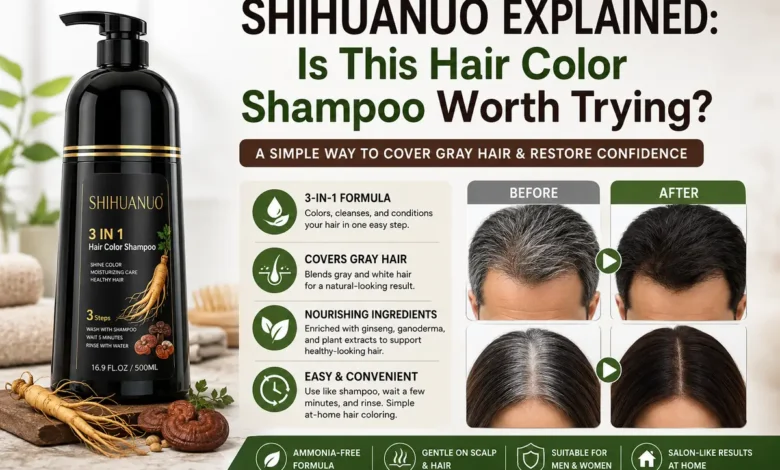
Shihuanuo is marketed as a simpler option. It is commonly sold as a three-in-one hair color shampoo combining color, cleansing, and conditioning. Its appeal is easy at-home gray coverage without a bowl and brush.
However, the word “shampoo” can create the wrong impression. This is still a coloring product, and it should be handled with the same care as other hair dyes. Results, ingredients, shade choices, and instructions may differ between versions. This guide explains what buyers should realistically expect before trying it.
What Is Shihuanuo?
Shihuanuo is a brand associated with shampoo-style hair color products for adult men and women. The most visible versions are designed to cover gray or white strands with shades such as black, brown, coffee, and reddish brown. Bottle size, shade names, and formula details can vary by country and seller.
The product is often described as three-in-one because it is intended to color the hair while offering shampoo-like cleansing and conditioner-like softness. That description refers to convenience. It does not mean the product should replace a regular shampoo for every wash.
Many versions come in pump bottles for home use. They target people who want to refresh roots, darken scattered gray strands, or maintain a dark shade without a salon visit.
How Does This Hair Color Shampoo Work?
A hair color shampoo spreads coloring ingredients while it is massaged through the strands. Its texture allows gloved-hand application instead of a tint brush. After the stated processing time, it is rinsed out.
Gray hair can be harder to color because its texture and porosity differ from one person to another. Fine gray strands may take color quickly, while coarse or resistant gray hair may need more careful saturation. This is why two people using the same shade can receive different results.
The final tone also depends on the starting color. A dark brown version may blend naturally into medium or dark hair, but it will not behave like bleach on very dark hair. It is mainly intended to add or restore a darker tone, not create a much lighter color.
What Results Can You Realistically Expect?
The most realistic goal is blended gray coverage rather than a dramatic salon makeover. When the shade is close to the user’s natural hair, the result may make white strands less noticeable and give the overall color a more even appearance.
Coverage may be strongest at the roots and in areas where the product is applied generously. Missed patches can remain visible, especially around the temples, sideburns, crown, and back of the head. Careful sectioning often improves the outcome.
No at-home color gives identical results to everyone. Previous dye, henna, chemical treatments, damage, and mineral buildup can affect development. A hidden strand test is useful, especially on treated hair.
Formula and Ingredient Claims
Listings commonly promote an ammonia-free formula with botanicals such as ginseng, ganoderma, camellia, macadamia, or argan-derived ingredients. Their effect depends on the exact formula.
“Herbal” or “natural” language does not mean a product is free from active colorants, preservatives, fragrance, or possible allergens. Plant extracts can also cause sensitivity in some users. The full ingredient list on the actual package matters more than broad front-label claims.
Formulas may change, and descriptions differ across shades or regions. Check the bottle, outer box, seal, batch details, and directions. Anyone avoiding a substance should not rely on a short marketplace description.
Choosing the Right Shade
The safest shade choice is usually one close to the current base color. Black may create a strong, deep finish and can look severe on naturally medium-brown hair. A brown or coffee tone may provide a softer blend, especially when the goal is to reduce the contrast between gray and darker strands.
Product photos are only a guide. Screens, lighting, and editing can change how warm or cool a shade looks. Mostly gray hair can also display color differently from hair with a few silver strands.
People deciding between two dark shades may prefer the lighter option for the first application. Dark color is often difficult to remove once it has developed. A strand test can show whether the chosen shade looks natural before it is placed across the full head.
How to Apply It Correctly
Read the exact bottle directions before opening it. Some versions may call for dry hair, while others may differ. Never copy timing from a video when it conflicts with the package.
Wear gloves and protect clothing, towels, counters, and the hairline. Section thick or long hair. Coat gray areas well, then spread the product through the remaining hair for even development.
Leave the formula on only for the stated time. Longer processing does not always produce better coverage and may raise the chance of irritation or an overly dark result. Rinse thoroughly until the water becomes clear or until the package directions say the product has been fully removed.
Use a dark towel because wet hair may transfer color. Clean spots on the ears, neck, shower, or sink promptly. Never use it on eyebrows or eyelashes.
Patch Testing and Safe Use
Complete a skin test before every application, even after safe past use. Follow the package method and waiting period. Do not use it if redness, itching, swelling, burning, bumps, or a rash appears.
Do not apply hair color to a cut, sunburned, inflamed, scratched, or actively irritated scalp. People with eczema, psoriasis, a past hair-dye reaction, or known cosmetic allergies should seek professional advice before use. The phrase “ammonia-free” does not make allergy testing unnecessary.
Stop if strong burning, facial swelling, breathing trouble, dizziness, or a spreading reaction develops. Rinse immediately and seek urgent care for severe symptoms. Discuss lasting mild irritation with a health professional.
Keep the formula away from the eyes and mouth. Store it out of reach of children and do not use it for purposes not listed on the package. Gloves, ventilation, accurate timing, and careful rinsing are basic safety steps, not optional extras.
How Long Does the Color Last?
Some listings claim several weeks of color, but wear time varies. Frequent washing, hot water, strong cleansers, sun, swimming, and heat styling can speed fading.
New gray growth is different from fading. Even when the colored lengths remain dark, silver roots can appear as the hair grows. People with fast growth or a strong contrast between gray and dark hair may notice roots sooner than expected.
Porous or damaged ends may absorb more color and look darker at first, yet they can also lose tone unevenly. Healthy, resistant gray hair may need more complete saturation. The best way to judge wear time is to observe the first application rather than depend on a fixed number of weeks.
Is It Suitable for Every Hair Type?
The product may be used on straight, wavy, curly, or coily hair, but texture alone does not predict the result. Hair density, strand thickness, porosity, length, and previous treatments all affect application and color uptake.
Curly and coily hair often needs careful sectioning so every gray area is covered without rough rubbing. Long or very thick hair may require more product than expected. Short hair and root-only applications generally use less.
Bleached, highlighted, relaxed, permed, or damaged hair needs extra caution because it may darken quickly or unevenly. With several chemical services, a colorist should judge compatibility and timing.
Main Benefits and Possible Drawbacks
The strongest reason to try Shihuanuo is convenience. It uses fewer tools than many home dyes and may spread more easily. It can also refresh dark gray coverage between salon visits.
The main points to weigh are:
- Simple gloved-hand application and fewer mixing steps
- Dark shades aimed at gray coverage for men and women
- Possible staining on skin, towels, showers, and clothing
- Results that vary with starting color, texture, and past treatments
- Allergy risk despite botanical or ammonia-free claims
The limited range will not suit highlights, vivid colors, blondes, or correction. Dark shades can build up with repeated full-length use, so root-focused touch-ups may prevent overly dark ends.
How It Compares With Other Coloring Options
Permanent box dye offers more shades and may give stronger, longer-lasting gray coverage. It often requires color, developer, mixing, and detailed application. That work may suit resistant gray hair or major change.
A salon provides shade selection, controlled placement, and help with old chemical work. It costs more but reduces guesswork, especially for highlights, lightening, correction, or sensitive scalps.
Temporary root sprays and powders are faster because they sit on the surface and wash away easily. They are useful for a single day but can rub off. Shihuanuo sits between quick cosmetic cover-up and a full salon service: more involved than a spray, but usually simpler than a conventional dye kit.
Caring for the Color After Application
Wash with lukewarm rather than very hot water. Choose a gentle cleanser made for colored hair when possible, and avoid unnecessary washing immediately after coloring if the directions recommend waiting.
Condition the mid-lengths and ends, and use heat protection before styling. Sun, pool water, and repeated high heat can dull dark color.
For later applications, focus on visible gray roots unless the lengths also need refreshing. Repeatedly coating the entire head can make the ends darker than the roots. Keep notes about the shade, timing, amount used, and final result so the next application is easier to control.
Frequently Asked Questions (FAQs)
These questions address common concerns before a first application. Answers may vary because shades and batches can carry different directions.
The package should always take priority over general online advice. Checking the label also helps buyers confirm the ingredients, processing time, warnings, and storage instructions for their specific bottle.
A patch test and strand test answer different questions. The skin test checks for a possible reaction, while the strand test helps predict the color result and the condition of the hair.
Is Shihuanuo a normal shampoo?
No. It has a shampoo-like application, but its main purpose is to add hair color and cover gray strands. It should be treated as a dye and used only as directed.
Can it cover completely white hair?
It may darken and blend white hair, but full coverage depends on strand texture, saturation, shade choice, and processing time. Resistant white hair may show a softer or less even result.
Can I use it on previously dyed hair?
It may be used on some previously colored hair, but old dye can change the final tone. Test a hidden strand first, especially after bleach, henna, relaxers, or permanent color.
Does ammonia-free mean it cannot cause an allergy?
No. A formula can be free from ammonia and still contain other ingredients that irritate the skin or trigger an allergic reaction. Complete the recommended skin test before every use.
Will it lighten dark hair?
It is mainly designed to deposit a darker shade or restore gray coverage. It should not be expected to lift very dark hair to a lighter brown or blonde result.
How often should I apply it?
Reapply only when the color has faded or new gray roots become visible, while following the package guidance. Avoid unnecessary full-length applications if only the roots need attention.
Final Thoughts
Shihuanuo may be worth trying for adults who want a convenient way to blend gray hair with a dark shade at home. Its shampoo-style texture and combined coloring approach can feel simpler than a traditional bowl, brush, and developer process.
Its value depends on realistic expectations. It is not a universal solution, a lightener, or a replacement for professional color correction. Shade selection, careful sectioning, accurate timing, and the condition of the starting hair will shape the final result.
Convenience should never replace safety. Check the ingredient list, complete the skin test, protect the area, and follow the bottle directions. It can suit simple gray coverage, while complex goals or sensitive scalps deserve professiona guidance.
Read More: Willowmagazine.co.uk