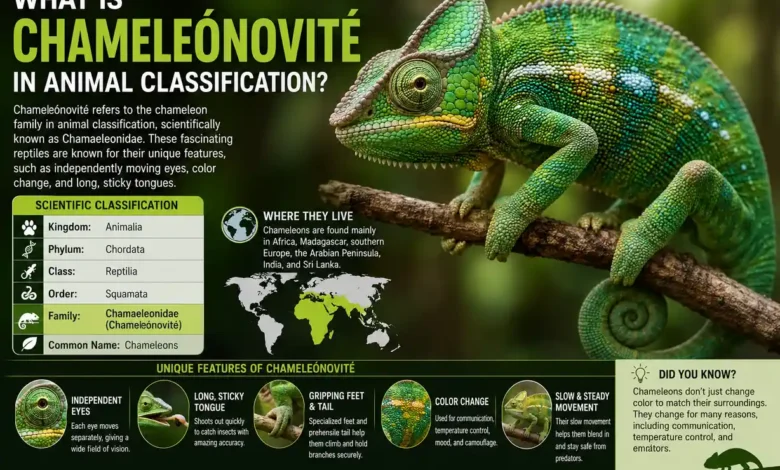
Chameleónovité is a term used for the chameleon family in animal classification. In science, this family is known as Chamaeleonidae. It belongs to a wider group of reptiles that includes lizards and snakes.
Many people know chameleons because they can change color. That is only one part of their story. Their eyes, feet, tongue, body shape, and slow movement all help scientists place them in a special family.
Understanding Chameleónovité helps readers see how animal classification works in a simple way. It also explains why chameleons are not just colorful pets or jungle animals, but a unique group with clear natural features.
This topic is useful for students, animal lovers, pet keepers, and anyone who wants to understand reptiles better. Once the family position is clear, the rest of the chameleon’s body and behavior becomes easier to understand.
It also helps remove common myths. Chameleons are often described as animals that change color like magic, but their place in science is based on real body structure, natural history, and shared traits.
What Chameleónovité Means
The word Chameleónovité points to the family of animals commonly called chameleons. A family is a rank used to group living things that share many body features and a close natural relationship.
In simple terms, Chameleónovité means “the chameleon family.” It includes many species that may look different in size, color, and habitat, but still share the same core traits.
This family is important because chameleons are easy to recognize. Their grasping feet, long tongue, moving eyes, and color-changing skin make them different from most other lizards.
The name also helps avoid confusion with animals that only look a little like chameleons. True chameleons belong to this family, while some other lizards may have similar colors or climbing habits but are placed elsewhere.
Where Chameleónovité Fits in Animal Classification
In animal classification, chameleons are part of the animal kingdom, the chordate phylum, the reptile class, and the order Squamata. Squamata is the large order that includes lizards, snakes, and worm lizards.
Within Squamata, chameleons are placed in the family Chamaeleonidae. This family rank helps separate them from geckos, iguanas, skinks, monitors, and other lizard groups.
This system is useful because it gives each animal a clear place. When someone asks what Chameleónovité is in animal classification, the best answer is that it is the family level name for true chameleons.
Classification also helps people compare animals in a careful way. Instead of judging only by appearance, scientists look at body structure, ancestry, and shared traits that show how animal groups are related.
Why Chameleons Are Classed as Reptiles
Chameleons are reptiles because they share the basic reptile features. They have dry, scaly skin, breathe air with lungs, and depend on outside heat to control body temperature.
They also lay eggs in many species, though some species give birth to live young. Their bodies are built for life on land, even when they live in humid forests or places with heavy plant cover.
Like other reptiles, chameleons do not make their own body heat the way mammals do. They warm themselves by using sunlight, shade, color changes, and position in their habitat.
This matters because their daily life depends strongly on temperature. A cool chameleon may move slowly and hunt less, while a warm one may become more active and alert.
Main Features of the Chameleónovité Family
Members of the Chameleónovité family have a set of traits that makes them easy to identify. These traits are useful for survival, and they also help scientists tell them apart from other reptiles.
Common chameleon features include:
- independently moving eyes
- a long, fast tongue
- feet shaped for gripping branches
- a body flattened from side to side
- skin that can change color in many species
Not every chameleon looks the same. Some are tiny and live close to the forest floor, while others are larger and spend most of their time in trees. Still, their shared structure connects them as one family.
These features are not just interesting details. They work together as a full survival system, helping chameleons climb, watch, hide, signal, and catch food with little wasted movement.
Eyes and Vision
A chameleon’s eyes are one of its most famous features. Each eye can move in a different direction, giving the animal a wide view of its surroundings without moving its whole body.
This is helpful for spotting insects, watching rivals, and avoiding predators. A chameleon can scan two areas at once, then focus both eyes on one target before striking.
This eye design supports its slow lifestyle. Instead of chasing prey over long distances, the chameleon waits, watches carefully, and uses accuracy at the right moment.
The raised shape of the eyes also helps protect them while the animal sits among leaves and branches. Good vision is one of the main reasons chameleons can hunt so well while staying almost still.
Tongue and Feeding Style
Chameleons are skilled hunters. Their long tongue can shoot out very fast and catch prey with a sticky tip. This allows them to feed while staying nearly still.
Most chameleons eat insects such as crickets, flies, grasshoppers, and moths. Larger species may also eat small animals when they get the chance, but insects remain the main food for many types.
This feeding method is one reason they are placed in a special family. Their tongue, eyes, and slow body movement work together as a hunting system.
The tongue is not only long; it is also accurate. The chameleon first judges distance with both eyes, then launches the tongue toward the prey. This makes its feeding style different from many fast-running lizards.
Feet, Tail, and Movement
Many chameleons live in trees and shrubs, so their bodies are shaped for climbing. Their toes are grouped in a way that lets them grip branches firmly, almost like small hands.
Many species also have a prehensile tail, which means the tail can curl around branches for balance. This gives extra support when the animal moves through leaves and thin stems.
Chameleons often walk slowly with a rocking motion. This movement may help them blend with branches moving in the wind, while also keeping them steady in high places.
Their slow pace can make them seem weak, but it is actually useful. A careful step lowers the chance of falling and helps the animal avoid drawing attention from predators.
How Color Change Works
Chameleons do not change color only to match every background. Color change can help with communication, temperature control, stress signals, and social behavior.
Their skin has special cells and reflective layers that affect how light is shown from the body. When these cells change, the animal’s visible color can shift.
A darker color can help absorb more warmth, while lighter colors can reflect more light. Bright colors may appear during courtship, warning, or rivalry, depending on the species and situation.
This makes color a kind of body language. Another chameleon may read bright colors as a sign of strength, interest, fear, or warning. The meaning depends on the species and the moment.
Habitat and Natural Range
Chameleons are mostly found in the Old World. This means they naturally live in parts of Africa, Madagascar, southern Europe, the Arabian Peninsula, India, and Sri Lanka.
Madagascar is especially important for chameleon diversity. Many species live there, including small leaf chameleons and larger forest species. Africa also has many different forms across forests, grasslands, and dry regions.
Their habitats can include rainforests, mountain forests, savannas, scrublands, deserts, and planted areas. Some species live high in trees, while others stay low among leaves or near the ground.
This wide range shows how flexible the family can be. Still, each species usually has its own needs for temperature, moisture, plants, food, and safe hiding places.
Life Cycle and Reproduction
Chameleon life cycles vary by species. Many lay eggs in soil or hidden places, while some give birth to live young in cooler or mountain habitats.
After hatching or birth, young chameleons are usually independent. They must find food, avoid predators, and grow without much care from adults.
Life span also differs. Some small species may live only a short time, while larger species can live several years. Environment, predators, food, and human care can all affect survival.
Young chameleons often look like smaller versions of adults, but their colors may be duller. As they grow, they may develop stronger patterns, larger body parts, and clearer social signals.
Chameleons and Their Role in Nature
Chameleons play an important part in natural food webs. By eating insects, they help control small animal populations in forests, gardens, grasslands, and other habitats.
They are also prey for birds, snakes, mammals, and larger reptiles. This makes them both hunters and hunted animals in their ecosystem.
Their presence can show that a habitat still supports specialized wildlife. When forests or shrubs disappear, many chameleon species lose the exact places they need to feed, hide, and breed.
Because many chameleons rely on certain plants and climate conditions, sudden changes can be harmful. A healthy landscape gives them branches, shade, insects, nesting spots, and protection from extreme heat.
Conservation and Human Impact
Some chameleons are common, but others are at risk because of habitat loss, illegal collection, climate pressure, and limited natural range. Species living in small areas can be especially sensitive.
Madagascar’s forests are a major concern because many chameleons live only there. When land is cleared, rare species may lose their home quickly.
People can help by protecting natural habitats, supporting legal wildlife rules, and avoiding wild-caught pets. Captive-bred animals are a better choice for responsible keepers, but chameleons still need expert care.
Chameleons are not simple beginner pets. They often need careful temperature control, fresh water mist, safe plants, proper insects, and low stress. Poor care can quickly harm their health.
Final Thoughts
Chameleónovité is the chameleon family in animal classification. It is a clear group within reptiles, known in science as Chamaeleonidae and placed within the order Squamata.
Chameleons stand out because of their eyes, tongue, feet, tail, skin, and slow hunting style. These features are not random; they are connected to how these animals live and survive.
Learning about this family makes animal classification easier to understand. It also shows why chameleons are more than colorful animals. They are highly adapted reptiles with a special place in nature.
When we understand them better, we are more likely to respect their habitats and needs. That is important for wild chameleons, captive animals, and the ecosystems where they belong.
Frequently Asked Questions (FAQs)
What is Chameleónovité?
Chameleónovité means the chameleon family in animal classification. It refers to true chameleons, which are reptiles known for their special eyes, gripping feet, long tongue, and color-changing ability.
Is Chameleónovité the same as Chamaeleonidae?
Yes, Chameleónovité refers to the same family that scientists call Chamaeleonidae. The scientific name is used worldwide, while local terms may change by language.
Are all chameleons able to change color?
Many chameleons can change color, but the amount of change depends on the species. Some show bright shifts, while others have a smaller color range used for warmth, mood, and signaling.
Where do chameleons live naturally?
Chameleons naturally live in parts of Africa, Madagascar, southern Europe, the Arabian Peninsula, India, and Sri Lanka. Their habitats include forests, shrubs, grasslands, mountains, and dry areas.
What do chameleons eat?
Most chameleons eat insects such as crickets, flies, moths, and grasshoppers. Larger species may sometimes eat small animals, but insects are the main food for many chameleons.
Why are chameleons important in nature?
Chameleons help control insect numbers and also serve as food for other animals. They are part of a balanced ecosystem and can show how healthy a habitat is.
Read More: Willowmagazine.co.uk