Coriander Is the Same As What Herb? Facts About Coriander Leaves, Seeds, and Flavor

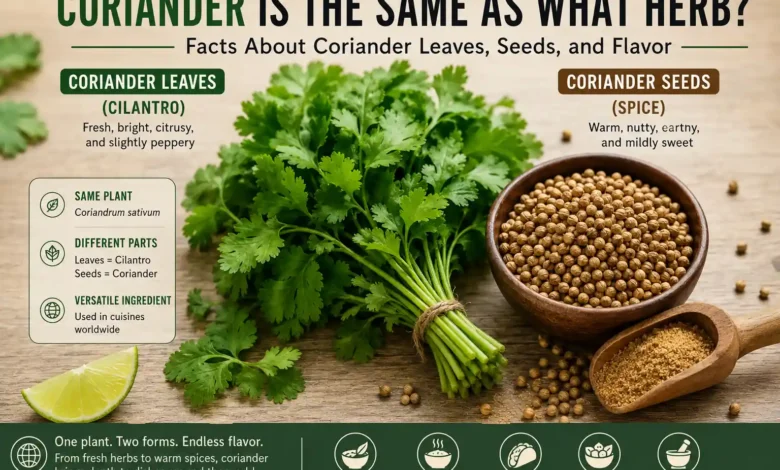
Many home cooks and grocery shoppers have asked the same question: coriander is the same as what herb? The answer depends on where you live and which part of the plant you are talking about. In the United States, the leaves are commonly called cilantro, while the dried seeds are known as coriander. In many other countries, however, the entire plant is simply referred to as coriander.
This naming difference often creates confusion in recipes, cookbooks, and food discussions. Someone following an international recipe may see coriander listed as an ingredient and wonder whether they need fresh leaves or dried seeds. Understanding the distinction helps improve cooking results and makes ingredient shopping much easier.
Beyond its name, coriander is one of the world’s most widely used culinary plants. It contributes fresh, citrus-like flavors through its leaves and warm, earthy notes through its seeds. Learning how coriander works in different cuisines can help cooks make better use of this versatile herb and spice.
Understanding What Coriander Is
Coriander comes from the plant Coriandrum sativum, an annual herb belonging to the parsley family. It has been cultivated for thousands of years and remains a staple ingredient in cuisines across Asia, Europe, the Middle East, Latin America, and North America.
In the United States, the fresh green leaves are typically called cilantro. The seeds that develop after flowering are harvested, dried, and sold as coriander seeds or ground coriander. Although these products come from the same plant, they have very different appearances and flavor profiles.
The distinction between cilantro and coriander is largely cultural and regional. In countries such as the United Kingdom, India, Australia, and South Africa, coriander often refers to both the leaves and the seeds. This variation explains why recipe terminology can sometimes seem inconsistent.
Understanding this naming convention is the first step toward answering the common question about what herb coriander is the same as. Most often, people are referring to cilantro when discussing coriander leaves.
Coriander Is the Same As Cilantro: Why the Names Differ
One reason for the ongoing confusion is that American English adopted the Spanish word “cilantro” for the leaves, while retaining “coriander” for the seeds. This practice became common as Mexican and Latin American cuisine gained popularity throughout the United States.
From a botanical perspective, cilantro and coriander are not separate plants. They are simply different parts of the same herb. The leafy portion is harvested while the plant is young, while the seeds are collected after the flowers mature and dry.
Many grocery stores reinforce this distinction by labeling fresh bunches as cilantro and spice jars as coriander. As a result, shoppers may assume they are purchasing unrelated ingredients when they are actually buying different forms of the same plant.
Recognizing this relationship helps eliminate confusion and allows cooks to better understand recipes from various regions around the world.
The Flavor of Coriander Leaves
Fresh coriander leaves, known as cilantro in the United States, provide a bright, refreshing flavor that many people describe as citrusy, grassy, and slightly peppery. These leaves are often used as a garnish or added near the end of cooking to preserve their delicate taste.
Cilantro is especially popular in Mexican dishes such as tacos, salsa, guacamole, and burritos. It also appears frequently in Thai curries, Vietnamese soups, Indian chutneys, and Middle Eastern salads.
Interestingly, not everyone experiences cilantro in the same way. Some individuals perceive a soapy or metallic flavor due to genetic variations affecting taste receptors. This trait has been studied extensively and helps explain why cilantro can be highly polarizing.
Despite differing opinions, cilantro remains one of the most recognizable fresh herbs in global cuisine. Its distinctive flavor contributes freshness and complexity to a wide range of dishes.
The Flavor of Coriander Seeds
Unlike the leaves, coriander seeds have a warm, nutty, and mildly sweet flavor. They often carry hints of citrus, spice, and earthiness that complement both savory and sweet recipes.
Whole seeds are frequently toasted before use. Toasting releases aromatic oils that deepen the flavor and create a richer fragrance. Ground coriander is commonly included in spice blends, curry powders, rubs, and marinades.
The flavor difference between cilantro leaves and coriander seeds surprises many people. Even though they come from the same plant, the seeds offer a completely different culinary experience.
Because of their balanced flavor, coriander seeds pair well with vegetables, meats, legumes, rice dishes, and baked goods. They are considered one of the most versatile spices available to home cooks.
Nutritional Benefits of Coriander
Coriander is valued not only for flavor but also for its nutritional content. The leaves contain vitamins A, C, and K, along with antioxidants that support overall wellness.
Fresh cilantro provides small amounts of minerals such as potassium and manganese. Because it is usually consumed in modest quantities, it is not a major source of nutrients, but it still contributes beneficial plant compounds to the diet.
Coriander seeds contain dietary fiber and natural antioxidants. They have long been used in traditional culinary practices and are appreciated for their aromatic properties.
While coriander should not be viewed as a miracle food, incorporating herbs and spices into meals is an excellent way to add flavor without excessive salt, sugar, or fat.
How Coriander Is Used Around the World
Different cultures use coriander in unique ways, making it one of the most globally recognized culinary ingredients. Its versatility allows both the leaves and seeds to play important roles in regional cooking traditions.
In India, coriander seeds are frequently ground into spice blends and curries. Fresh coriander leaves are commonly sprinkled over finished dishes to add brightness and color.
Mexican cuisine relies heavily on cilantro in fresh salsas, tacos, soups, and rice dishes. The herb adds a fresh contrast to rich ingredients and spicy flavors.
Middle Eastern cooking often combines coriander with parsley, mint, lemon, and olive oil. The herb contributes freshness to salads, dips, and grilled foods.
Asian cuisines use coriander in soups, noodle dishes, stir-fries, and dipping sauces. The herb’s versatility helps it complement a wide variety of ingredients and cooking methods.
Growing Coriander at Home
Many gardeners appreciate coriander because it is relatively easy to grow. The plant thrives in well-drained soil and benefits from moderate sunlight and consistent moisture.
Fresh leaves can be harvested within weeks of planting. Regular harvesting encourages continued growth and provides a steady supply of cilantro throughout the season.
If allowed to mature, the plant eventually flowers and produces seeds. These seeds can be collected, dried, and stored for future culinary use.
Growing coriander at home offers an economical way to enjoy both fresh herbs and dried spices from a single plant. It also gives gardeners greater control over freshness and quality.
Common Cooking Mistakes With Coriander
One of the most common mistakes is confusing cilantro and coriander in recipes. Adding coriander seeds when a recipe calls for fresh cilantro can significantly alter the intended flavor.
Another error involves cooking fresh cilantro for too long. Extended heat exposure diminishes its bright flavor and aromatic qualities. Most recipes achieve better results when cilantro is added near the end of cooking.
Improper storage can also reduce quality. Fresh cilantro should be refrigerated and used promptly, while coriander seeds should be stored in airtight containers away from heat and light.
Understanding how each form of coriander functions in recipes helps ensure better texture, aroma, and overall flavor in finished dishes.
Coriander Substitutes and Alternatives
When fresh cilantro is unavailable, cooks may consider alternatives such as parsley, Thai basil, or fresh dill. While none perfectly replicate cilantro’s flavor, they can provide freshness and color in many recipes.
For coriander seeds, substitutes may include cumin, caraway, fennel, or a blend of mild spices. Each option offers different flavor characteristics, so adjustments should be made carefully.
Selecting the right substitute depends on the specific dish and the role coriander plays within the recipe. Some recipes require only a fresh herbal note, while others rely on coriander’s distinctive citrus-like spice profile.
Whenever possible, using actual coriander remains the best option because its unique characteristics are difficult to duplicate completely.
Why Coriander Remains Popular Today
The enduring popularity of coriander stems from its versatility, affordability, and distinctive flavor. Few culinary plants provide both a fresh herb and a flavorful spice from the same source.
Modern consumers increasingly appreciate ingredients that enhance meals naturally without relying on artificial flavorings. Coriander fits this preference by delivering complex flavors in a simple, recognizable form.
The herb’s presence in diverse cuisines also contributes to its popularity. Whether someone enjoys Mexican street food, Indian curries, Middle Eastern salads, or Asian soups, coriander often plays a supporting role.
As global food culture continues to expand, coriander remains one of the most important ingredients connecting culinary traditions across continents.
Final Thoughts
So, coriander is the same as what herb? In most cases, the answer is cilantro. Both come from the same plant, Coriandrum sativum. In the United States, cilantro refers to the fresh leaves, while coriander generally refers to the dried seeds. Other parts of the world often use the word coriander for the entire plant.
Understanding this distinction helps eliminate confusion when reading recipes, shopping for ingredients, or exploring international cuisines. It also highlights the remarkable versatility of a plant that provides both a fresh herb and a flavorful spice.
Whether you enjoy the bright taste of cilantro leaves or the warm aroma of coriander seeds, this ingredient continues to play a vital role in kitchens around the world. Its unique flavors, culinary flexibility, and long history ensure that coriander will remain a favorite among cooks for generations to come.
Frequently Asked Questions (FAQs)
1. Is coriander the same as cilantro?
Yes. Coriander and cilantro come from the same plant, Coriandrum sativum. In the United States, cilantro refers to the leaves, while coriander usually refers to the seeds. In many other countries, coriander is used for both the leaves and seeds.
2. Why do some people dislike cilantro?
Some people carry genetic traits that cause cilantro to taste soapy or metallic. This reaction is linked to how certain flavor compounds are perceived by specific taste receptors, making the herb enjoyable for some and unpleasant for others.
3. Can coriander seeds replace cilantro in recipes?
Not usually. Coriander seeds and cilantro leaves have very different flavor profiles. The seeds are warm and earthy, while the leaves are bright and citrusy. Substituting one for the other may significantly change a dish.
4. What foods pair well with coriander?
Coriander works well with vegetables, rice, beans, chicken, seafood, lamb, soups, curries, and fresh salads. Its versatility makes it a valuable ingredient in many cuisines around the world.
5. Is coriander healthy?
Coriander contains vitamins, antioxidants, and beneficial plant compounds. While it is generally consumed in small amounts, it can contribute flavor and nutrients as part of a balanced diet.
6. Can I grow coriander at home?
Yes. Coriander is relatively easy to grow in gardens, raised beds, or containers. The leaves can be harvested as cilantro, while mature plants produce seeds that can be dried and used as coriander spice.
Read More: Willowmagazine.co.uk