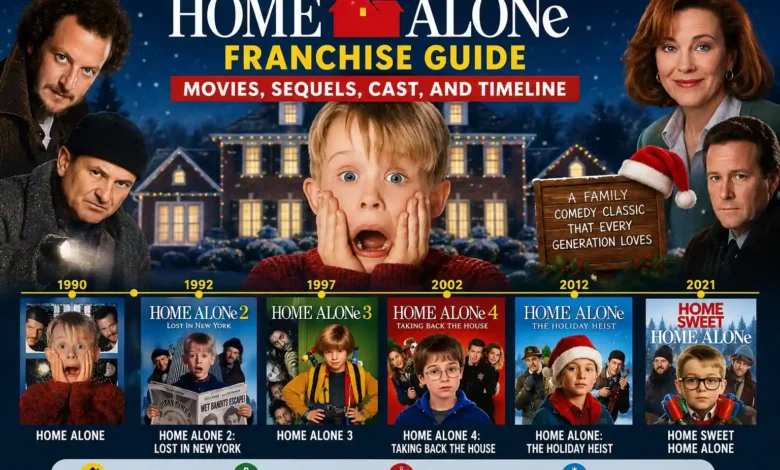
The Home Alone franchise is one of the most familiar family comedy series connected with Christmas, childhood, and holiday rewatching. It began with a simple idea: a child is left without adults and must protect the home from unwanted trouble.
Over time, that idea became bigger than one movie. The series moved from a suburban Chicago house to New York City, then to new families, new children, and new settings. Some entries are loved more than others, but each one follows the same playful spirit.
This guide explains the movies, sequels, cast, story timeline, and lasting appeal in a clear way. It is written for readers who want the full picture without confusion or long film terms.
What Is Home Alone?
Home Alone is a family comedy franchise built around children who are separated from adult help during the holiday season. The main child character usually faces burglars, thieves, or unwanted visitors and uses clever traps to stay safe.
The first two movies focus on Kevin McCallister, played by Macaulay Culkin. Kevin is smart, funny, emotional, and sometimes mischievous. His story helped shape the tone of the whole series.
The franchise mixes comedy, family drama, slapstick action, and warm Christmas feeling. It is not just about traps. It is also about family, fear, courage, forgiveness, and learning what home really means.
How the Franchise Started
The first film was written and produced by John Hughes and directed by Chris Columbus. Hughes was already known for stories about families, teenagers, and everyday life. Columbus brought a warm and polished family-movie style.
The original idea worked because it felt easy to understand. Many children have imagined being in charge of the house for a day. The movie turned that idea into a funny holiday adventure with danger that still felt light and safe.
Macaulay Culkin’s performance made the story memorable. His facial expressions, timing, and natural energy helped Kevin feel like a real kid, not just a movie hero. That is one reason the first film still connects with new viewers.
Franchise Timeline and Viewing Order
The series can be watched in release order, which is also the easiest way to understand how it changed. The first two films follow Kevin. Later entries use new children, new families, and a softer connection to the original story.
- Home Alone (1990); Home Alone 2: Lost in New York (1992); Home Alone 3 (1997); Home Alone 4: Taking Back the House (2002); Home Alone: The Holiday Heist (2012); Home Sweet Home Alone (2021).
Watching this order shows the shift from big theatrical movies to TV-style sequels and then a modern streaming-era revival. It also shows how the same core idea was repeated with different characters.
For most viewers, the first two films are the heart of the franchise. The later movies are best seen as spin-off style entries that borrow the formula while trying to build their own version of it.
Home Alone (1990): The Classic Beginning
The first movie follows eight-year-old Kevin McCallister after his large family accidentally leaves him behind while traveling to Paris for Christmas. At first, Kevin enjoys the freedom. He eats what he wants, watches what he wants, and lives out a child’s dream.
The fun changes when two burglars, Harry and Marv, plan to rob the house. Kevin realizes he must protect himself and the family home. He sets up creative traps that turn the break-in into a wild comedy sequence.
The cast is one of the movie’s strongest parts. Macaulay Culkin leads the film, while Joe Pesci and Daniel Stern play Harry and Marv with loud, physical comedy. Catherine O’Hara and John Heard add the emotional family side as Kevin’s parents.
Home Alone 2: Lost in New York (1992)
The second movie brings Kevin back, but this time he is not left at home. He gets on the wrong flight and ends up alone in New York City while his family travels to Florida. The setting gives the sequel a bigger and brighter feeling.
Kevin explores hotels, toy stores, Central Park, and busy city streets. The story becomes more colorful because New York feels huge compared with the family house from the first film. It gives Kevin more freedom, but also more danger.
Harry and Marv return after escaping prison, which keeps the strongest comic pairing from the first movie alive. Tim Curry, Brenda Fricker, and other supporting actors help the sequel feel full of memorable side characters.
Home Alone 3 (1997): A New Child Hero
Home Alone 3 moves away from Kevin McCallister and introduces Alex Pruitt, played by Alex D. Linz. Alex is home sick when he discovers that criminals are searching for a toy car that contains a stolen computer chip.
This film has a more action-focused setup. The villains are not simple neighborhood burglars. They are international criminals, which makes the story feel less grounded but more like a spy comedy for younger viewers.
Some fans missed Kevin and the original cast, but the third movie still uses the classic formula. A smart child watches the adults underestimate him, then turns the home into a trap-filled defense zone.
Home Alone 4 and The Holiday Heist
Home Alone 4: Taking Back the House came out as a TV movie and brought back the names Kevin, Marv, and other McCallister family connections. However, the roles were played by different actors, so it feels separate from the first two movies.
The story places Kevin in a more modern house with new family problems. It tries to mix the old character setup with a fresh situation. For many viewers, the change in cast makes it harder to see it as a direct continuation.
Home Alone: The Holiday Heist arrived later with another new child lead, Finn Baxter. This entry follows a boy who believes his new home may be haunted, while thieves are actually searching the house. It leans into mystery, light scares, and family-friendly holiday fun.
Home Sweet Home Alone (2021)
Home Sweet Home Alone brought the franchise back for modern viewers. It introduces Max Mercer, played by Archie Yates, and focuses on a misunderstanding involving a valuable doll and two adults who believe Max has taken it.
This entry changes the usual setup by giving more attention to the adults who become the “intruders.” Instead of making them purely bad, the film shows their money worries and family stress. That choice gives the story a different tone.
The movie also includes Devin Ratray returning as Buzz McCallister, which creates a direct nod to the earlier films. Even so, it works mostly as a new version of the idea rather than a true follow-up to Kevin’s childhood story.
Main Cast Across the Franchise
The most famous cast member is Macaulay Culkin as Kevin McCallister. His role became one of the most recognizable child performances in holiday movie history. Kevin’s confidence, fear, and humor all feel clear on screen.
Joe Pesci and Daniel Stern are just as important to the first two movies. Harry and Marv are funny because they are threatening enough to create tension but foolish enough to keep the mood playful. Their pain-filled reactions became a key part of the series style.
Catherine O’Hara gives the early films their emotional weight as Kate McCallister. Her search for Kevin reminds viewers that the story is not only about comedy. It is also about a mother trying to get back to her child.
Common Themes and Comedy Style
The franchise often uses the same emotional pattern. A child feels ignored, then becomes independent, then learns that being alone is not as simple as it first seemed. This gives the comedy a soft emotional center.
The trap scenes are the most famous part. They work like live-action cartoons, with slippery floors, falling objects, hot door handles, paint cans, and surprise hits. The humor is physical, fast, and easy to understand across different countries.
Family is the deeper theme. Kevin and other children may enjoy freedom at first, but the stories usually end with reunion, apology, and relief. The message is simple: home is not only a place, but the people who care about you.
Cultural Impact and Lasting Popularity
Home Alone became more than a movie because families returned to it every holiday season. Its music, lines, scenes, and poster image became part of Christmas culture. Even people who have not watched every sequel often know Kevin’s famous shocked face.
The first film was also a major box office success. Its strong performance helped prove that a child-led family comedy could become a worldwide hit. That success made sequels and later revivals possible.
The franchise lasts because it is easy to enter. A viewer does not need deep background knowledge. The idea is clear within minutes, and the mix of humor, danger, and warmth keeps the story friendly for many ages.
Best Way to Watch the Movies Today
New viewers should begin with the 1990 film because it sets the heart of the franchise. It introduces the tone, the family conflict, the burglars, and the type of comedy that later movies try to repeat.
After that, Home Alone 2 is the natural next step. It is the closest sequel in story, cast, style, and emotional rhythm. Watching these two together gives the clearest sense of why the series became so loved.
The later entries can be watched as bonus chapters. They are useful for anyone who wants to see how the concept changed over time, but they do not carry the same direct story weight as the first two films.
Final Thoughts
Home Alone remains popular because it takes a childhood wish and turns it into a funny, warm, and exciting holiday story. The idea is simple, but the best moments are full of charm and emotion.
The franchise timeline shows both success and change. The first two movies are still the strongest for many fans, while the later sequels show how the formula was tested with new characters and new settings.
For readers who want the best starting point, the answer is easy: watch the first film, then the New York sequel. After that, explore the rest as lighter family adventures connected by the same playful idea.
Frequently Asked Questions (FAQs)
What is Home Alone about?
Home Alone is about a child who is separated from adult help and must deal with danger during the holiday season. The first movie follows Kevin McCallister as he protects his house from two burglars after his family accidentally leaves him behind.
How many Home Alone movies are there?
There are six main feature-length entries in the franchise. They include the first two Kevin McCallister movies, a third theatrical film with a new child hero, two TV-style sequels, and the modern revival Home Sweet Home Alone.
Do I need to watch the movies in order?
Watching in release order is the easiest choice because it shows how the franchise changed over time. However, the first two films tell the most connected story, while the later entries can be watched more like separate family adventures.
Who played Kevin McCallister?
Macaulay Culkin played Kevin McCallister in the first two movies. His performance became one of the main reasons the character stayed famous for decades, especially during the Christmas season.
Is Home Alone 3 connected to Kevin?
Home Alone 3 is not a Kevin McCallister story. It introduces Alex Pruitt, a different child hero, and uses a new plot with new villains while keeping the same basic idea of a clever child defending his home.
Which Home Alone movie should I watch first?
Start with the 1990 movie because it explains the tone, humor, family feeling, and trap-based comedy that made the franchise famous. After that, watch Home Alone 2: Lost in New York for the strongest direct sequel.
Read More: Willowmagazine.co.uk