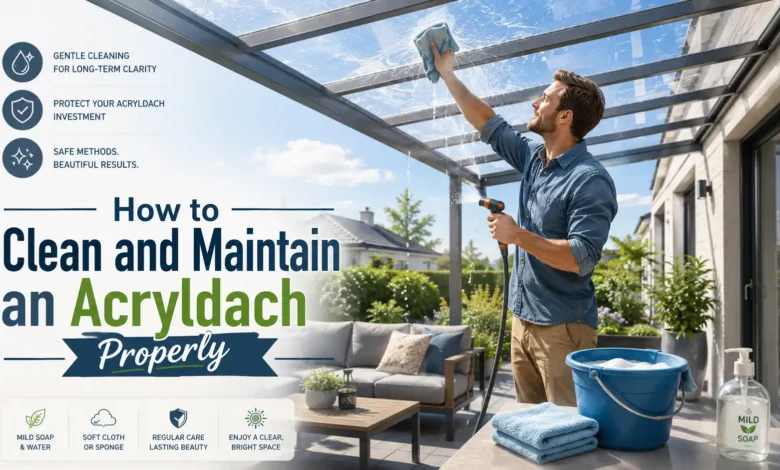
An Acryldach can make an outdoor space brighter, cleaner, and more useful through the year. It lets natural light pass through while helping protect patios, balconies, terraces, pergolas, garden seating areas, and carports from rain and dirt. But like any clear or semi-clear roof material, it needs the right care to stay attractive.
Cleaning it may seem simple, but acrylic is not the same as glass. It can scratch more easily and may become cloudy if the wrong cleaner is used. This is why proper care matters from the first day.
The good news is that regular maintenance is not difficult. With gentle tools, mild soap, clean water, and a safe routine, you can keep your Acryldach clear, strong, and good-looking for many years.
This guide explains how to clean it properly, what to avoid, how often to inspect it, and how to protect it from common outdoor damage.
What an Acryldach Is and Why Maintenance Matters
An Acryldach is a roof or roof covering made with acrylic panels. These panels are often used where people want daylight without leaving the space open to rain. You may see them over terraces, small walkways, carports, outdoor dining areas, or greenhouse-style spaces.
Acrylic roofing is valued because it is light, clear, and weather resistant. It can make a dark outdoor corner feel more open. It also gives a modern look without the heavy feel of traditional roofing.
However, outdoor panels face dust, leaves, bird droppings, pollen, algae, rain marks, and air pollution. Over time, these can reduce clarity and make the surface look dull. If dirt stays too long, cleaning becomes harder.
Maintenance also helps you spot small problems early. Loose screws, blocked gutters, cracked sealant, or trapped debris can lead to leaks or panel stress if ignored.
Common Dirt and Problems on an Acryldach
The most common issue is surface dirt. This may include dust, mud splashes, pollen, and dried rain marks. In dry weather, fine dust can build up quickly, especially near roads, trees, or construction areas.
Leaves are another common problem. They may look harmless, but when wet, they can hold moisture against the panel surface. This may encourage algae, green staining, or blocked drainage paths.
Bird droppings should be cleaned sooner rather than later. They can dry hard and become difficult to remove. Scrubbing them with force can scratch the acrylic, so soft soaking is safer.
Another issue is cloudy patches. These can happen when harsh cleaners, rough pads, or dry wiping are used. Sometimes the damage is only surface-level, but deep clouding may not be easy to fix.
Tools and Supplies You Should Use
The safest cleaning tools are soft, clean, and non-abrasive. A microfiber cloth, soft sponge, garden hose, bucket, and mild dish soap are usually enough for normal cleaning. Lukewarm water helps loosen dirt without stressing the material.
You do not need strong chemicals for everyday care. In fact, strong cleaners often create more problems than they solve. A simple soap-and-water mix is usually the best option for acrylic roof panels.
Use this basic cleaning kit:
- Soft microfiber cloth or soft sponge
- Bucket of lukewarm water with mild soap
- Garden hose with gentle water pressure
- Soft brush only for frames, not panel surfaces
Keep separate cloths for the panels and the frame. Dirt from metal or wooden frame areas can contain grit, and that grit may scratch the acrylic if dragged across the panel.
Step-by-Step Cleaning Method
Start by rinsing the Acryldach with clean water. This first rinse is important because it removes loose dust, grit, and small particles. If you wipe before rinsing, those particles can act like sandpaper.
Next, mix mild soap with lukewarm water. Dip a soft sponge or cloth into the solution and gently wipe the panels. Work in small sections instead of trying to clean the whole roof at once.
Do not press hard. Light pressure is enough for most dirt. For dried stains, let the soapy water sit for a few minutes, then wipe gently again. Soaking is safer than scrubbing.
After washing, rinse the roof fully with clean water. Soap left behind can create streaks or attract more dust. Let the surface air dry, or gently blot reachable areas with a clean, soft cloth.
What You Should Never Use on Acrylic Roof Panels
Never use ammonia-based glass cleaners on an Acryldach. Acrylic may look like glass, but it reacts differently to chemicals. Harsh cleaners can make the surface cloudy, dull, or weak.
Avoid alcohol-heavy cleaners, acetone, gasoline, strong solvents, bleach, scouring powders, steel wool, rough brushes, and abrasive pads. These products can damage the surface or leave permanent marks.
Dry wiping is also a mistake. Even if the roof only looks dusty, wipe it only after rinsing or wetting the surface. Dry dust can scratch when rubbed across acrylic.
Pressure washers should be used with great care, and in many cases, avoided on the panels. Strong water pressure can damage seals, force water into joints, or loosen fittings.
Seasonal Maintenance for Better Long-Term Care
A good routine is to inspect the roof at least twice a year. Spring and fall are useful times because outdoor dirt often builds up after winter weather and leaf fall.
In spring, clean away dust, pollen, and rain marks. This prepares the roof for brighter months and helps keep outdoor spaces fresh. It is also a good time to check if winter winds loosened any fittings.
In fall, remove leaves and organic debris before they sit wet for weeks. Pay close attention to gutters, edges, and corners where leaves often collect.
After storms, do a quick visual check. Look for fallen branches, shifted panels, blocked drainage, or cracked sealing areas. Small checks can prevent expensive repairs later.
Handling Stains, Moss, and Bird Droppings
For bird droppings, soften the stain first with lukewarm soapy water. Let it sit for a few minutes, then wipe gently with a soft cloth. Repeat if needed instead of scraping.
For green algae or moss near edges, clean gently and improve drainage. Growth often appears where water sits too long. Removing the cause is just as important as removing the stain.
Tree sap can be more difficult. Do not attack it with strong solvent. Start with warm soapy water and patient wiping. If it does not move, use only a product clearly made for acrylic surfaces.
For stubborn marks, test any cleaner on a small hidden area first. This simple step can save the whole panel from visible damage.
Checking Frames, Seals, and Drainage
Cleaning the panels is only one part of caring for an Acryldach. The support frame, screws, seals, and drainage channels also need attention. These parts help the roof stay stable and watertight.
Check the frame for rust, movement, cracks, or loose joints. Aluminum frames usually need little care, but they should still be cleaned and inspected. Wooden frames may need more regular protection.
Look closely at rubber seals or silicone joints. If they are cracked, loose, or shrinking, water may enter during heavy rain. Replacing worn sealing early is often easier than fixing water damage later.
Drainage matters too. Clear gutters and channels so rainwater can flow away. Standing water adds weight and can leave stains on the roof surface.
Preventing Scratches and Cloudiness
The best way to fix scratches is to prevent them. Most fine scratches happen during cleaning, not during normal use. That is why rinsing first and using soft tools is so important.
Do not drag branches, ladders, tools, or outdoor furniture across the panels. If you need to work near the roof, cover nearby surfaces and move slowly. Acrylic can stay beautiful for a long time when handled with care.
Cloudiness often comes from chemical damage or repeated rough cleaning. Once acrylic becomes deeply cloudy, it may not return to its original clear look. Prevention is much easier than repair.
For light marks, a cleaner made for acrylic may help. But deep scratches, cracks, or chemical burns may need expert repair or panel replacement.
Safety Tips Before Cleaning the Roof
Never step directly on an Acryldach unless the manufacturer clearly says it is safe and proper support is in place. Many acrylic roof panels are not made to carry body weight.
Use a stable ladder and keep both feet secure. Do not lean too far across the roof. It is better to move the ladder than to stretch and risk falling.
Avoid cleaning during strong sun, high wind, rain, or freezing weather. Mild, cloudy weather is often best because soap will not dry too fast on the panels.
If the roof is high, steep, large, or hard to reach, hire a professional. Safety should always come before saving a small amount of money.
Final Thoughts
An Acryldach does not need complicated care. It needs gentle care. Mild soap, clean water, soft cloths, and regular inspection are the main things that keep it looking clear and working well.
The most important rule is to avoid harsh cleaners and rough tools. Acrylic is strong for outdoor use, but its surface needs careful handling. Treat it gently, and it will reward you with long-lasting clarity.
Make cleaning part of a simple seasonal routine. Remove leaves, rinse dirt, check seals, and clear drainage before small issues grow into bigger problems.
With the right habits, your Acryldach can stay bright, clean, and dependable for patios, balconies, terraces, carports, and garden spaces through many seasons.
Frequently Asked Questions (FAQs)
How often should I clean an Acryldach?
Most homes only need a full cleaning two or three times a year. If the roof is near trees, roads, birds, or heavy dust, it may need light rinsing more often.
Can I use normal glass cleaner on an Acryldach?
No, it is safer to avoid normal glass cleaner because many products contain ammonia or strong chemicals. Mild soap and lukewarm water are usually the best choice.
Can I use a pressure washer to clean acrylic roof panels?
It is better to avoid strong pressure on the panels and seals. A garden hose with gentle water flow is safer for regular cleaning and helps prevent damage.
What is the best way to remove bird droppings?
Soak the area with lukewarm soapy water first, then wipe gently with a soft cloth. Do not scrape it with hard tools because that can scratch the acrylic surface.
Why does my Acryldach look cloudy after cleaning?
Cloudiness may come from harsh chemicals, abrasive pads, dry wiping, or old surface wear. Stop using strong cleaners and switch to gentle acrylic-safe care methods.
Should I repair or replace a scratched acrylic roof panel?
Small surface marks may improve with proper acrylic polish, but deep scratches or cracks often need expert help. If the panel leaks, bends, or looks unsafe, replacement may be the better option.
Read More: Willowmagazine.co.uk