A business website is no longer a simple online brochure. It may need to publish large amounts of content, connect with outside tools, serve visitors on many devices, and remain stable during heavy traffic. When these parts are planned poorly, even an attractive site can become slow, difficult to update, or costly to maintain.
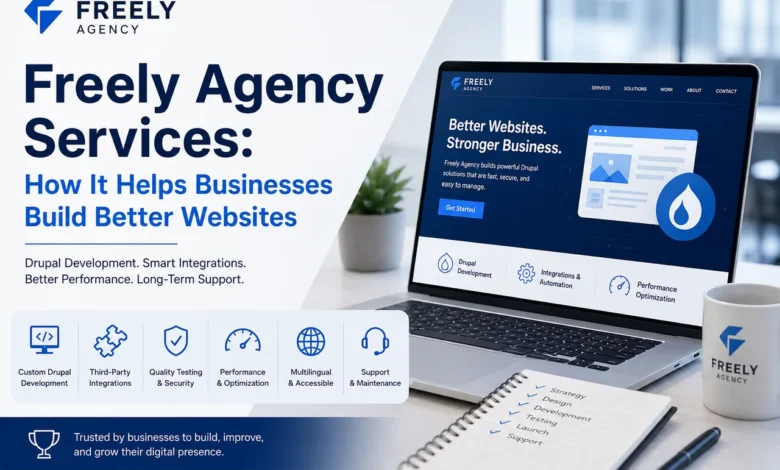
Freely Agency is a Prague-based web development company focused mainly on Drupal projects. Its public service profile covers development, integration, testing, performance improvement, accessibility, migration, design, security reviews, and long-term support. The agency also highlights experience with complex Czech publishing portals.
This article explains what the company offers, how its services fit together, and what businesses should consider before selecting a development partner.
What Is Freely Agency?
Freely Agency builds and operates modern website solutions. Its main technical focus is Drupal, an open-source content management system suited to sites that need flexible content structures, custom workflows, several user roles, or links with other business systems.
Its service range includes consulting, front-end development, migration, deployment, e-commerce, multilingual builds, accessibility, audits, upgrades, hosting, and support. This suggests a full-lifecycle approach.
Its public message places business needs before technical choices. A team should first ask why a website exists, who will use it, and what results it must support. Its Drupal.org profile also lists support for several community projects.
Drupal-Centered Website Development
Drupal supports varied content types, detailed permissions, approval steps, reusable page elements, and large collections of articles or products. These features suit organizations with complex digital operations.
Freely Agency describes Drupal as a base for complex solutions, including API-first systems, decoupled builds, and online stores. An API-first project can deliver content to websites, apps, and other channels. A decoupled setup allows the visible interface and content system to be developed more independently.
This flexibility requires careful planning. Clear content models, disciplined code, documentation, and regular review help keep the platform manageable as needs grow.
For a small site with fixed pages, a simpler tool may be enough. Drupal becomes more valuable when integrations, permissions, languages, or growth exceed a basic builder’s limits.
Planning Around Business Needs
Good website work starts with discovery. The team should understand users, current problems, technical limits, and expected outcomes. This separates essential functions from costly extras.
Freely Agency says business needs guide its work. In practice, a discovery stage may examine how leads are collected, how editors publish, how customer data moves, and where users struggle. The findings can then shape the project scope and delivery plan.
A useful review may cover:
- Target users and their most important tasks
- Content types, permissions, and approval steps
- Outside systems that must exchange information
- Performance, accessibility, security, and reporting needs
Clear planning also improves budgeting. Early identification of difficult integrations and migrations reduces surprises. A written scope, stages, acceptance rules, and responsibilities keep both sides aligned.
Better Tools for Editors and Content Teams
Visitors see the finished pages, but employees use the management system every day. If publishing is confusing, teams may create inconsistent layouts, delay updates, or depend on developers for simple changes. A strong platform should make routine work clear and safe.
Freely Agency says it aims to create an intuitive experience for editors. In Drupal, this may involve clear content forms, reusable components, media libraries, preview tools, scheduled publishing, and role-based permissions.
Structured content stores information in separate fields instead of one large text box. It is easier to reuse, format, filter, and deliver across channels.
Training and documentation should complete the handover. Editors need guidance on pages, media, approvals, links, and common mistakes. This reduces errors after launch.
Third-Party Integrations and Automation
Modern websites rarely work alone. A company may need its site to exchange information with a customer platform, payment provider, warehouse system, email service, analytics tool, map service, or internal database. Manual copying wastes time and increases the chance of mistakes.
Freely Agency lists third-party integration as a central service and refers to automation in logistics, analytics, and marketing. The purpose is to let systems exchange useful information through controlled processes.
Developers must decide what data moves, how often it moves, which system is the main record, and what happens when a request fails. Security, access controls, logs, and error alerts also need attention.
Automation can send orders to fulfillment tools, place leads into customer records, or pass campaign data into reports. It saves time and creates more consistent information.
Quality Assurance and Safer Releases
A website may look correct on one screen while failing on another. Forms can break, permissions can expose the wrong content, and a small code change can affect an unrelated feature. Testing is therefore a core part of professional development.
Freely Agency states that its process includes double code checking, involvement from a quality team, and careful production deployment. Testing may cover layouts, mobile behavior, browsers, forms, search, accounts, payments, redirects, and outside connections.
Automated checks help with repeated functions, while human review covers visual details and user journeys. Acceptance rules define what must work before release.
A safer launch process should include backups, tested deployment steps, suitable timing, active monitoring, and a rollback plan. Busy sites may need updates during lower-traffic periods so problems can be found and corrected quickly.
Performance for Large and Busy Websites
Slow pages frustrate visitors, increase abandonment, and make editorial work harder. Large portals face added pressure because they may serve many pages, images, users, and database requests at the same time.
Freely Agency highlights both front-end and back-end performance work. Its stated methods include application improvement, cache setup, and monitoring. These areas address different causes of delay rather than treating speed as one simple issue.
Front-end work may reduce oversized images, unnecessary scripts, and blocking resources. Back-end work can improve database queries, server settings, and code paths. Caching saves completed results so the system does not repeat the same work for every visitor.
Monitoring can reveal traffic spikes, failed requests, slow database calls, and server limits before they cause outages. This matters for publishers, campaigns, and seasonal stores.
Clear Site Structure and Technical Visibility
A useful website needs a logical structure that people and automated systems can understand. Pages should have clear titles, stable addresses, useful descriptions, and sensible links to related content. Rebuilds also require careful handling of old addresses.
Freely Agency says it prepares sites with correctly generated metadata and redirects. Metadata gives systems basic page information, while redirects send an old address to the most relevant new page. Poor planning can lead to broken visits and lost page history.
Technical preparation also includes clear heading order, useful navigation, accurate index controls, and machine-readable site maps. These elements help content remain organized and easier to discover.
Businesses should review duplicate pages, broken links, outdated sections, and unclear navigation. Developers and content teams must coordinate because structure and editorial quality affect each other.
Accessibility, Mobile Use, and Global Reach
People visit websites with different devices, abilities, connection speeds, and language needs. A site that works well for only one group limits its audience and may create customer-service or legal concerns.
Freely Agency’s Drupal profile lists accessibility, mobile development, multilingual websites, usability, and information architecture. These areas all focus on helping people find, understand, and complete tasks without needless barriers.
Accessible development may include keyboard support, visible focus states, readable contrast, form labels, image descriptions, and correct page structure. Mobile work should consider touch targets, flexible layouts, readable text, and slower connections.
Multilingual projects need more than translated paragraphs. Navigation, forms, dates, media, and permissions may vary by language. Early planning prevents an incomplete experience.
Security, Maintenance, and Future Upgrades
A website launch begins its working life. Software changes, security issues appear, browsers evolve, and business needs expand. Without regular care, a modern platform can become risky and expensive to update.
Freely Agency lists security reviews, upgrades, site audits, hosting, and ongoing support. These services can help identify outdated components, weak permissions, configuration problems, and performance concerns before they cause serious disruption.
Maintenance should include software updates, backups, recovery tests, account reviews, uptime checks, and log reviews. Custom code also needs attention when Drupal or a connected service changes. Long delays may make future upgrades harder and more costly.
A support agreement should define responsibility, service hours, response levels, backup ownership, and release approval. These details matter once the site becomes business-critical.
How a Project May Move From Idea to Launch
A full website project commonly moves through discovery, planning, design, development, testing, migration, launch, and support. Each stage should produce something the client can review before the team moves forward.
Planning sets the scope, content needs, integrations, timing, and acceptance rules. Design turns user needs into page structures and visual patterns. Development builds the system, while regular demonstrations allow feedback before too much work is completed.
Migration needs special care when an old site contains valuable content. Teams must map fields, clean records, transfer files, preserve important addresses, and check the results. A sample migration should be tested before the final move.
After launch, the team should monitor errors, speed, behavior, and editor feedback. Early improvements can remove friction and stabilize daily use.
Who Could Benefit From Freely Agency?
Freely Agency may be most relevant to organizations that need a custom Drupal platform, a large publishing system, complex integrations, or improvements to an existing site. Its stated work with sophisticated publishing portals may appeal to content-heavy businesses.
It may also suit teams seeking one partner for migration, development, testing, performance work, deployment, and support. Coordinating these areas can reduce gaps between separate suppliers and make responsibility clearer.
Not every business needs a complex build. A small company with a few static pages and no special workflows may be better served by a simpler platform. Choosing a larger system without a clear reason can increase cost and maintenance.
Before hiring, ask for relevant examples, team roles, communication methods, testing practices, support terms, and a clear estimate. The right partner explains a realistic path to a stable solution.
Final Thoughts
Freely Agency presents itself as a Drupal-focused development company with experience in complex sites, integrations, quality control, performance, and long-term operation. Its services cover visible features and the less visible technical work that keeps a platform dependable.
The main value of this approach is the connection between business planning and engineering. A website becomes more useful when editors can manage it, visitors can navigate it, outside systems can exchange data, and the platform can handle growth.
Businesses should still review project fit, communication, budget, relevant experience, and documented responsibilities before signing an agreement.
For organizations needing more than a basic website, Freely Agency may offer the Drupal knowledge and practical support required to build a flexible, stable, and manageable digital platform.
Frequently Asked Questions (FAQs)
What does Freely Agency specialize in?
Freely Agency mainly focuses on Drupal website development. Its public service profile also covers integrations, migrations, accessibility, testing, performance, security reviews, upgrades, design, and support.
Where is Freely Agency located?
The company is based in Prague, Czech Republic. It works in web development and can discuss cooperation online as well as through its local office.
Does Freely Agency only build new websites?
No. Its listed capabilities also include audits, upgrades, data migration, performance tuning, security reviews, hosting, and ongoing support for existing websites.
Can it connect a website with business software?
Third-party integration is one of its stated service areas. This may include connections with logistics, analytics, marketing, payment, mapping, or other professional systems, depending on project needs.
Is Drupal suitable for a small business?
It can be, but it is usually most valuable when a business needs custom content, several user roles, integrations, multiple languages, or room for major growth. A simpler site may not need that flexibility.
What should a client prepare before contacting the agency?
A client should outline business goals, user needs, current problems, required functions, available content, preferred timing, and budget range. Clear information helps the agency assess scope and suggest a practical solution.
Read More: Willowmagazine.co.uk