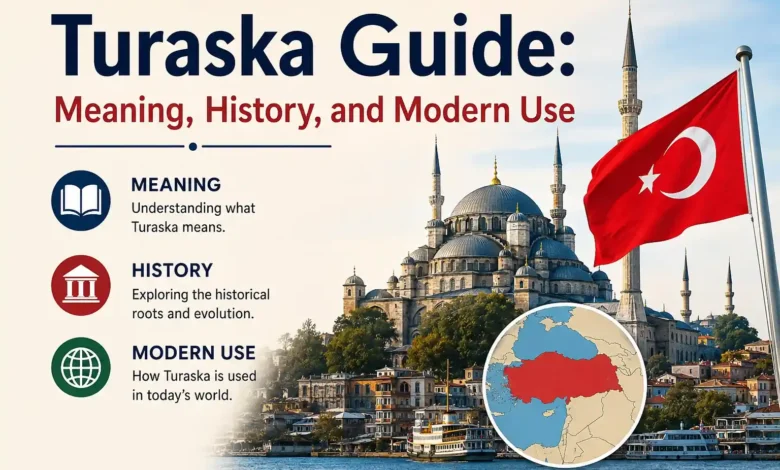
Turaska is a small word, but it can carry more than one meaning. Many readers first meet it while looking at language, geography, history, or old cultural writing. That is why a clear guide is helpful.
The word is often linked with Turkey, the country now officially known in many formal global settings as Türkiye. It can also appear as a spelling form connected to older South Asian terms for Turkish people, foreign regions, or groups from the northwest.
Because the same word can appear in different settings, context matters. A simple spelling in English letters may point to a Bengali country name, a historical Sanskrit form, or a modern online spelling used by learners.
This guide explains Turaska in plain language. It covers the meaning, spelling, background, and modern use so readers from the U.S., U.K., and other countries can understand it without confusion.
What Does Turaska Mean?
Turaska usually means Turkey when it is used as a roman spelling of the Bengali word “তুরস্ক.” In that case, it points to the country, not the bird or the meat called turkey in English.
In older language study, Turaska can also be connected with Turaṣka, Turashka, or Turushka. These forms appear in South Asian historical and literary writing, where they may refer to Turks, Turkish-linked groups, or foreign people from western and northwestern regions.
The meaning depends on where the word appears. In a travel note, school lesson, or Bengali-English setting, it is likely about the country. In a history book or Sanskrit discussion, it may have a much older meaning.
This is the main reason the word feels confusing. It is not only one modern label. It also has a language history that reaches into older writing and regional identity.
Why the Spelling Can Look Different
Turaska is a romanized form, which means a word from another script is written using English letters. Bengali and Sanskrit words do not always move into English letters in one fixed way.
That is why readers may see Turaska, Turashka, Turaṣka, or Turushka. The small changes come from sound, script, and writing style. Some writers keep the spelling simple, while others use marks that show exact pronunciation.
For everyday readers, Turaska is the easiest form to read. Academic writers may prefer Turaṣka because the dot under the “s” shows a specific Sanskrit sound. Most general readers do not need to use that mark.
The key point is simple: different spellings may point to the same word family. Before deciding the meaning, always look at the sentence and the subject around it.
Turaska as a Bengali Word for Turkey
In Bengali, “তুরস্ক” is commonly used for Turkey. When typed in English letters, many people write it as Turaska. This use is common among learners, translators, travelers, and people who write Bengali words in Latin letters.
This meaning is very practical. A Bengali speaker may use Turaska when asking about the country, its capital, its culture, or its people. In this case, the word belongs to modern language use.
It is also important to know that English has two uses of “turkey.” It can mean a country in older English naming, and it can also mean a bird or food. Turaska normally points to the country when it comes from Bengali.
This difference helps avoid mistakes. If someone writes about Ankara, Istanbul, Turkish culture, or travel, Turaska is almost certainly about the country, not the bird.
Turaska and the Country Called Türkiye
The country connected with Turaska sits between Europe and Asia. Most of its land is in Anatolia, while a smaller part lies in southeastern Europe. This position has made it a bridge between regions for centuries.
Ankara is the capital, but Istanbul is the largest and best-known city. Istanbul is famous because it has deep history and stands near the Bosporus, a waterway that helps connect the Black Sea with the Mediterranean world.
The country has been known internationally as Turkey for a long time, but the name Türkiye is now used in many formal international settings. This change helps match the country’s own name more closely.
For a modern reader, this means Turaska may connect with Turkey in older English use and Türkiye in newer formal use. Both can point to the same country, but the setting decides which name feels more suitable.
Historical Roots in Sanskrit and South Asian Writing
Older forms linked with Turaska appear in Sanskrit and related historical writing. These forms were often used for people or regions seen as connected with Turks or areas beyond the northwest of the Indian subcontinent.
In some texts, such words were not always narrow ethnic labels. They could be broad terms for foreign groups, soldiers, rulers, traders, or people from lands beyond familiar cultural borders.
This matters because old words do not always match modern national identities. A historical use of Turaska does not always mean the modern Republic of Türkiye. It may reflect how earlier writers described outside groups in their own time.
Careful reading is needed when the word appears in older texts. The meaning may be political, cultural, geographic, or literary, depending on the period and the writer.
How the Meaning Changed Over Time
Words often move with people, trade, migration, and writing. Turaska is a good example of how a term can shift from older cultural use into simpler modern language use.
In earlier writing, related forms could describe groups from Central Asia or regions linked with Turkish movement and power. Over time, the word also became connected with the country now known in Bengali as Turkey.
Modern use is usually less complex. Most readers today are not thinking about old empires or ancient categories when they type Turaska. They are often looking for the meaning of a country name.
Still, the older background adds depth. It shows that the word is not random. It belongs to a larger story of language contact between South Asia, Central Asia, the Middle East, and Europe.
Modern Use in Language, Travel, and Learning
Today, Turaska is mostly useful in language learning. People may use it while translating Bengali, studying country names, or reading travel content in simple English letters.
It can also appear in school notes, social posts, travel searches, and general knowledge pages. A student may write Turaska because it is easier than typing the Bengali script on a device.
For travelers, the word may appear when Bengali speakers discuss visas, flights, tourism, education, food, or work in Turkey. It works as a bridge between Bengali pronunciation and English typing.
This modern use is informal but easy to understand. It helps people communicate across scripts, especially when they do not have a Bengali keyboard or do not know the exact formal spelling.
Common Confusion Around the Word
The biggest confusion comes from the fact that Turaska can point in more than one direction. One reader may see it as a country name, while another may connect it with historical terms.
This does not mean either reader is wrong. They may simply be reading the word in different settings. Language often works this way, especially when old words meet modern spelling habits.
A quick way to understand it is to check the setting around the word:
- Country or travel context usually means Turkey or Türkiye.
- Old Indian history context may mean Turushka or Turaṣka.
- Bengali-English context usually means “তুরস্ক.”
Another confusion comes from English “turkey” as a bird. Turaska normally avoids that problem because it is not the common English bird word. It is usually tied to a place or a historical label.
How to Use the Word Correctly
Use Turaska when you are writing a simple English-letter form of the Bengali word for Turkey. It is useful in casual notes, learning content, and quick explanations.
If you are writing in a formal geography article, Turkey or Türkiye may be clearer for a global audience. These names are more widely recognized by readers who do not know Bengali or South Asian spellings.
If you are writing about history, it is better to explain the form you are using. You can say Turaska is related to Turaṣka or Turushka, then define the historical setting in clear words.
Good writing avoids assuming that all readers know the background. A short explanation makes the word easier to understand and prevents confusion between modern geography and older history.
Helpful Context for Readers
Turaska is best understood as a word shaped by language contact. It connects Bengali writing, English letters, older Sanskrit forms, and the history of Turkish-linked peoples and places.
It also shows how country names can change across languages. English speakers say Turkey or Türkiye, Bengali speakers say “তুরস্ক,” and roman typing may produce Turaska.
This kind of variation is normal. Many countries have different names in different languages. Germany, Deutschland, and Allemagne all point to the same country in different language traditions.
So, when you see Turaska, do not treat it as a strange or separate place. In most modern cases, it is simply another way to write or discuss Turkey through a Bengali or South Asian language lens.
Why Turaska Still Gets Attention
Turaska gets attention because it sits at the meeting point of simple meaning and deeper history. Some people want a quick answer, while others want to know where the word came from.
The word also appears because people often type words the way they sound. This is common in multilingual communities, especially among Bengali speakers who use English letters in daily online writing.
Another reason is curiosity about Turkey itself. The country is known for history, tourism, food, education, trade, and culture. A local-language name for it naturally attracts interest.
The older forms add another layer. Readers who study South Asian history may notice that Turaska is close to words used in earlier texts, which makes the topic more interesting than a normal country name.
Final Thoughts
Turaska is a useful word with a layered meaning. In most modern use, it is a simple English-letter form of the Bengali word for Turkey. In older study, it can connect with Sanskrit forms used for Turkish-linked people or regions.
The safest way to understand it is through context. If the topic is travel, geography, language, or Bengali translation, it likely means the country. If the topic is old literature or medieval history, it may carry a broader historical sense.
For everyday writing, keep the meaning clear. Explain the word once, then use the name that best fits your audience, such as Turaska, Turkey, or Türkiye.
A small word can open a large story. Turaska connects scripts, cultures, regions, and time periods, which is why it remains worth understanding today.
Frequently Asked Questions (FAQs)
What is Turaska?
Turaska is often a simple English-letter spelling of the Bengali word “তুরস্ক,” which means Turkey. In some historical settings, it can also connect with older forms like Turaṣka or Turushka.
Is Turaska the same as Turkey?
In modern Bengali-related use, yes, Turaska usually means Turkey or Türkiye, the country. It should not be confused with the bird or meat called turkey in everyday English.
Why are there different spellings of Turaska?
The spelling changes because Bengali and Sanskrit sounds can be written in English letters in different ways. Turaska, Turashka, Turaṣka, and Turushka may appear depending on the writer and the context.
Is Turaska a modern word or an old word?
It can be both. Modern users may write Turaska as a roman form of a Bengali country name, while older related forms appear in South Asian historical and literary writing.
When should I use Turaska instead of Türkiye?
Use Turaska when explaining the Bengali form or when writing for readers who know that spelling. Use Türkiye in formal modern country references, especially for a global audience.
Why do people search for Turaska?
People search for it to understand its meaning, spelling, country connection, and history. Some want a simple translation, while others are curious about its older cultural background.
Read More: Willowmagazine.co.uk