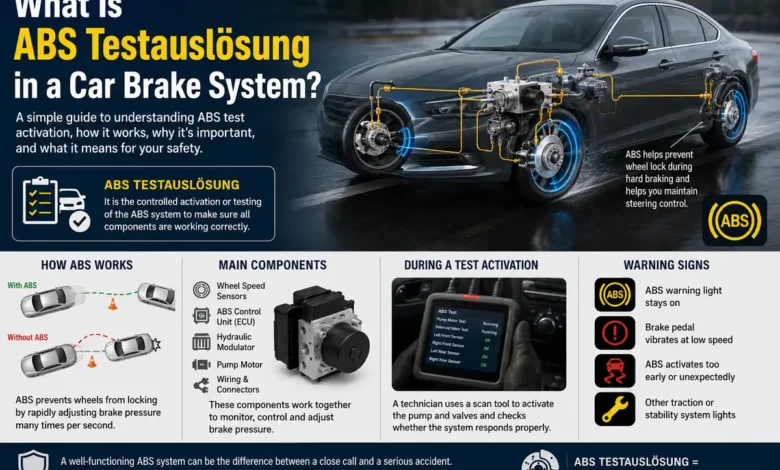
Modern cars use many safety systems that work quietly in the background. One of the most important is the anti-lock braking system, usually called ABS. It helps a driver keep control when braking hard, especially on wet, icy, or loose road surfaces.
The term ABS Testauslösung may sound technical because it comes from German. In simple English, it points to a test activation or triggered check of the ABS system. It is often used when talking about diagnosis, brake testing, or the moment the ABS unit is made to operate during an inspection.
Understanding this topic is useful for everyday drivers, not only for mechanics. When you know what the system is testing and why it may activate, warning lights and brake pedal vibrations become less confusing. You can also make safer decisions when your car shows signs of an ABS problem.
This guide explains ABS Testauslösung in clear words. It covers how ABS works, what happens during a test, which parts are involved, what warning signs matter, and when a professional brake inspection is the smart next step.
Table of Contents
ToggleMeaning of ABS Testauslösung
ABS Testauslösung means an ABS test activation. In a car brake system, it usually describes the controlled triggering of the anti-lock braking function to check whether the system responds correctly. This can happen during a diagnostic process, a self-check, or a workshop test.
The word “Auslösung” means triggering or activation. So, when joined with ABS, it points to the action of making the anti-lock system wake up and perform. The aim is not to make the car stop suddenly for no reason. The aim is to confirm that sensors, valves, the pump, and the control unit can work together.
In normal driving, ABS activates only when the system detects that one or more wheels may lock under braking. During a test, the activation is controlled. A technician may use a diagnostic tool, a safe test area, or a specific service procedure to check the response.
How ABS Works During Braking
ABS is designed to stop the wheels from locking when a driver brakes hard. A locked wheel can slide across the road surface. When that happens, the driver may lose steering control, even if the brake pedal is pressed with full force.
The system watches wheel speed through sensors. If one wheel slows much faster than the others, the control unit treats it as a sign that the wheel may lock. It then changes brake pressure at that wheel very quickly.
This pressure change may happen many times in a short moment. The driver may feel pulsing through the pedal and may hear a buzzing or clicking sound. These signs can feel strange, but during real ABS operation they often mean the system is doing its job.
Main Parts Involved in ABS Testauslösung
A test activation checks more than one part. ABS is not a single item. It is a group of electronic and hydraulic parts that must communicate correctly under pressure.
The most important parts usually include:
- Wheel speed sensors that report how fast each wheel is turning
- An ABS control unit that compares sensor signals and makes decisions
- A hydraulic modulator with valves that adjust brake pressure
- A pump motor that helps restore or manage pressure during ABS operation
- Brake fluid, wiring, fuses, and connectors that support the system
If one part gives wrong data or cannot respond, the test may fail. That is why a proper diagnosis looks at the whole system, not just the warning light on the dashboard.
What Happens During a Test Activation?
During ABS Testauslösung, the system is triggered so its response can be observed. In a workshop, this may be done with a scan tool that commands the pump motor or valves for a short time. The technician listens, feels, and reads live data to see whether the unit reacts normally.
In some cases, the test may be part of a brake bleeding process. Certain ABS hydraulic units can trap air inside the modulator. A scan tool may activate the pump and valves so trapped air can move through the system and be removed correctly.
A safe road test can also show whether ABS activates under controlled braking. This should only be done where it is legal and safe. Public roads are not the place for sudden test braking unless a trained person is following a proper inspection method.
Why a Vehicle May Need This Test
A car may need an ABS activation test after brake repairs. If the hydraulic unit, brake lines, calipers, master cylinder, or brake fluid has been serviced, the system may need extra checks to confirm correct operation.
The test may also be needed when the ABS warning light stays on. A dashboard light does not always say which part has failed. It only tells the driver that the system has detected a problem and has stored information for diagnosis.
Another reason is a complaint from the driver. For example, the brake pedal may pulse at low speed, the ABS may activate too early, or the car may show traction and stability messages. In these cases, the test helps separate a real ABS fault from a tire, bearing, wiring, or brake hardware issue.
ABS Warning Light and Fault Codes
The ABS warning light is one of the clearest signs that the system needs attention. It may turn on briefly when the car starts, then go off after the self-check. That short light check is normal in many vehicles.
If the light stays on while driving, the anti-lock feature may be disabled. The regular brakes may still work, but the car may not have the same protection against wheel lock during hard braking. This matters most in rain, snow, loose gravel, or emergency stops.
A repair shop will usually read stored fault codes with a diagnostic scanner. These codes can point toward a wheel speed sensor, pump motor, control module, low voltage, wiring fault, or hydraulic unit issue. The code is a starting point, not the final answer by itself.
Wheel Speed Sensors and False Activation
Wheel speed sensors are small but very important. They measure wheel rotation and send that information to the ABS control unit. If a sensor signal is weak, missing, or uneven, the system may make the wrong decision.
False ABS activation can happen at low speed when the system thinks a wheel is about to lock even though the road is dry. This may be caused by rust, a cracked tone ring, dirt near the sensor, a damaged wire, or extra play in a wheel bearing.
A good inspection does not replace parts by guesswork. It compares live wheel speed readings, checks wiring, inspects the sensor area, and looks at the physical condition of the brake and hub parts. This saves time and avoids unnecessary repair costs.
Hydraulic Modulator, Pump, and Valves
The hydraulic modulator is the part that changes brake pressure during ABS operation. It contains valves that can hold, reduce, or restore pressure to a brake circuit. These actions happen quickly and are controlled by the ABS unit.
The pump motor helps manage pressure after the valves release it. During ABS Testauslösung, a technician may command the pump to run briefly. A normal sound can show that the pump is receiving power and is able to respond.
Problems inside the modulator can be harder to confirm than a simple sensor fault. Sticking valves, internal corrosion, trapped air, or pump motor failure may require careful testing. This is one reason ABS work is often best handled by a trained brake technician.
Can Drivers Feel ABS Testauslösung?
In normal driving, most drivers do not feel ABS unless they brake hard or the road is slippery. When it activates, the pedal may vibrate, push back slightly, or feel like it is rapidly pulsing. This can surprise drivers who have never felt it before.
During a workshop test, a driver may not feel anything if the car is stationary and the scan tool is only commanding components. The technician may hear the pump or clicking valves instead. Some tests are felt at the pedal, while others are only seen in diagnostic readings.
The key point is that pulsing during real emergency braking is not a reason to release the brake. In a car with ABS, the driver should keep steady pressure on the pedal and steer where they need to go.
What ABS Can and Cannot Do
ABS improves control, but it does not cancel the laws of physics. It can help prevent wheel lock and may help the driver steer during hard braking. That makes it valuable in sudden stops and poor road conditions.
It does not guarantee a shorter stopping distance every time. On loose gravel, deep snow, mud, or very rough surfaces, stopping distance can vary. Tires, road grip, speed, vehicle weight, and driver reaction still matter a lot.
This is why ABS should be seen as support, not magic. Safe following distance, good tires, working brakes, and calm steering are still essential. The best brake system cannot fully protect a driver who is too close, too fast, or distracted.
Common Misunderstandings About ABS
Many drivers think they should pump the brake pedal during an emergency stop. That advice applied to older cars without ABS. In a modern car with working ABS, pumping the pedal can reduce the system’s ability to manage pressure correctly.
Another misunderstanding is that any ABS noise means something is broken. During real activation, buzzing, clicking, or pedal vibration can be normal. The system is changing pressure rapidly, so the driver may feel and hear mechanical action.
A third mistake is ignoring the ABS light because the car still stops. Regular braking may still feel normal, but the anti-lock function may not be ready when needed. The warning light should be checked before the next difficult road situation exposes the fault.
What to Do Before Repair or Inspection
If your ABS light is on, start with basic safety checks. Make sure the brake fluid level is correct, the tires are in good condition, and the battery is healthy. Low voltage can sometimes confuse electronic systems.
Do not unplug sensors or open brake lines without the right tools and knowledge. Brake systems are safety-critical. A small mistake can lead to a soft pedal, fluid leak, or poor stopping performance.
The best next step is a scan and inspection. Ask for a diagnosis that includes code reading, live wheel speed data, wiring checks, and a physical brake inspection. This gives a clearer answer than simply replacing the part named by a fault code.
Final Thoughts
ABS Testauslösung is simply the controlled activation or testing of the anti-lock braking system. It helps confirm whether the car’s sensors, control unit, pump, valves, and hydraulic parts can respond when needed.
For drivers, the main lesson is simple. ABS is there to help keep steering control during hard braking, but it must be working correctly. A warning light, strange low-speed activation, or brake service concern should not be ignored.
A healthy ABS system adds confidence, especially in rain, snow, and emergency stops. When in doubt, treat the brake system with care and have it checked by someone who understands modern vehicle safety systems.
Frequently Asked Questions (FAQs)
What does ABS Testauslösung mean?
ABS Testauslösung means ABS test activation. It describes the controlled triggering of the anti-lock braking system to check whether important parts respond correctly during diagnosis or service.
Is ABS Testauslösung dangerous?
It is not dangerous when done correctly with proper tools and safe conditions. It can become risky if someone tries sudden braking tests in traffic or opens brake parts without training.
Why does my brake pedal vibrate when ABS works?
The pedal can vibrate because the ABS is rapidly adjusting brake pressure. This feeling is often normal during hard braking on a slippery surface or during a real emergency stop.
Can I drive with the ABS light on?
The regular brakes may still work, but the anti-lock function may be disabled. You should drive carefully and have the system checked soon, especially before driving in wet or slippery conditions.
Does ABS Testauslösung fix ABS problems?
No, the test itself does not usually fix the problem. It helps identify whether the pump, valves, sensors, wiring, or control unit is working as expected.
When should a mechanic perform an ABS activation test?
A mechanic may perform it after brake hydraulic repairs, after replacing ABS parts, during brake bleeding on some vehicles, or when diagnosing warning lights and unusual ABS behavior.
Read More: Willowmagazine.co.uk
 Admin
Send an email
June 2, 2026
Admin
Send an email
June 2, 2026