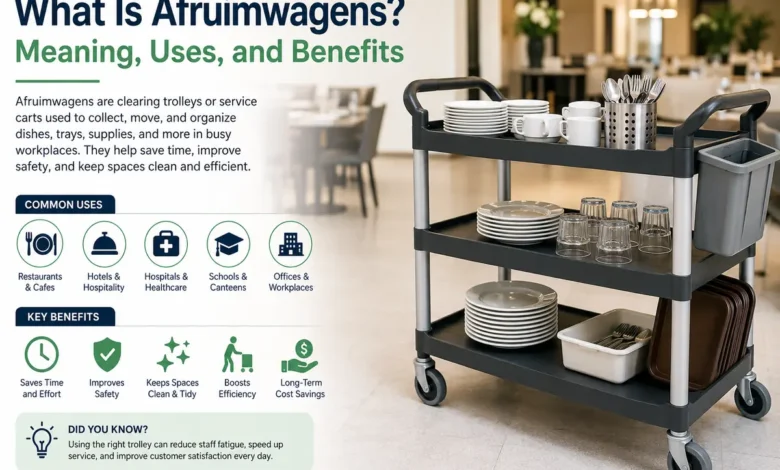
Afruimwagens may look like a simple word at first, but it points to a very useful tool in many busy places. In basic English, it usually refers to clearing trolleys or service carts used to move plates, trays, cups, tools, waste, and supplies from one place to another.
These trolleys are common in restaurants, hotels, cafes, canteens, hospitals, offices, schools, and event spaces. They help workers clear tables, carry items, organize service areas, and reduce repeated trips across a room or kitchen, especially during peak hours.
Think about a busy dining hall after lunch. Staff need to collect dishes, sort trays, remove leftovers, and return items to the wash area. Without a proper trolley, that work becomes slower, harder, and less tidy.
That is why Afruimwagens are more than rolling shelves. They support cleaner spaces, smoother movement, safer handling, and better daily service. When chosen well, they save time and make work feel more controlled.
The idea is simple, but the impact is real. A good trolley helps people work with less stress, fewer delays, and fewer awkward carrying tasks. It gives every team a cleaner way to manage repeated movement during the day.
What Does Afruimwagens Mean?
The word Afruimwagens comes from Dutch use. “Afruimen” is linked with clearing away or tidying up, while “wagens” means carts or wagons. Put together, the word describes carts used for clearing items after use.
In English, the closest terms are clearing trolley, bussing cart, service cart, utility trolley, or transport cart. The exact name changes by country and industry, but the purpose stays almost the same.
Afruimwagens are designed to carry items that should not be moved by hand again and again. They often have shelves, handles, wheels, raised edges, and sometimes bins or cutlery holders. These parts help staff move many small items safely in one trip.
A simple way to understand the term is this: Afruimwagens are mobile work helpers. They bring order to service, cleaning, and transport tasks by keeping everything in one moving unit.
The word may sound unfamiliar to English readers, but the object itself is easy to recognize. If you have seen a worker roll a cart full of plates from a dining room to a kitchen, you have already seen the basic idea in action.
Where Afruimwagens Are Used
The most common place to see Afruimwagens is in food service. Restaurants, cafes, buffets, hotels, and catering teams use them to clear tables and move plates, glasses, trays, bowls, and cutlery to the dishwashing area.
They are also helpful in canteens and school dining rooms. In these settings, many people eat in a short time, so staff must clear tables fast. A good trolley keeps the process neat and helps avoid piles of dishes on counters.
Hospitals and care homes may use similar carts for meal service, room clearing, laundry movement, or general support tasks. In these places, easy cleaning and smooth movement are very important because the work must stay organized and hygienic.
Afruimwagens can also support offices, workshops, warehouses, salons, and event venues. Anywhere people need to move supplies, collect used items, or reset spaces quickly, a strong trolley can become part of the daily workflow.
They are especially useful in places where timing matters. During breakfast service, lunch breaks, weddings, conferences, or hospital meal rounds, workers often need to clear one area while preparing the next. A trolley helps them keep that rhythm.
Main Types and Features
Afruimwagens come in different designs because every workplace has different needs. Some are light and simple, while others are strong enough for heavy commercial use. The best choice depends on the items being moved, the floor surface, the space size, and how often the trolley is used.
Many models have two or three shelves. A two-shelf cart is easy to load and may work well in small cafes or offices. A three-shelf cart gives more room and helps separate clean items, used dishes, and small tools.
Some carts include extra parts for better sorting: waste bins, cutlery cups, tray slots, raised side rails, quiet wheels, push handles, and locking brakes. These small details can make a big difference during a busy shift because workers can sort as they move.
Common material choices include stainless steel, plastic, and coated metal. Stainless steel is strong and easy to wipe clean. Plastic carts can be lighter and quieter. Coated metal can be useful in general workplaces when the cart does not face constant moisture.
The best design is usually the one that matches the task, not the one that looks the most impressive. A compact cart can be better in a narrow cafe, while a large heavy-duty cart may suit a hotel banquet area or commercial kitchen.
Benefits for Staff, Customers, and Workplaces
The biggest benefit of Afruimwagens is easier movement. Staff can carry more items in one trip without holding heavy stacks in their arms. This can reduce tiredness during long shifts and help workers keep a steady pace.
They also improve safety when used correctly. Carrying too many dishes by hand can lead to spills, broken items, or strain. A stable trolley gives workers a safer way to move goods through dining rooms, corridors, and kitchens.
Customers may not notice the trolley itself, but they notice the result. Tables are cleared faster, walkways stay cleaner, and service areas look more professional. A tidy space can make a restaurant, hotel, or canteen feel more welcoming.
For businesses, the value is practical. Better clearing means faster table turnover, smoother cleaning, fewer delays, and better use of staff time. The trolley may be simple, but it can support the whole flow of service.
Afruimwagens also help protect plates, glasses, and tools. When items have a stable place to sit during transport, there is less chance of dropping or bumping them. This can reduce waste and keep expensive supplies in better condition.
How to Choose the Right Afruimwagens
Choosing the right Afruimwagens starts with knowing the work it must do. A small cafe may only need a compact cart for cups and plates. A large hotel or buffet may need a heavier trolley with more shelves and a higher load limit.
Size matters a lot. A trolley should be large enough to reduce trips, but not so large that it blocks narrow paths. Before buying one, it helps to measure doorways, kitchen aisles, storage rooms, elevator space, and the area where the cart will be parked.
The wheels deserve close attention. Smooth wheels make the cart easier to push, while brakes help keep it still during loading and unloading. Quiet wheels can be useful in hotels, care homes, libraries, and offices where noise matters.
Here is one simple checklist to use before choosing:
- Check the load capacity for daily use.
- Choose a material that matches cleaning needs.
- Make sure the shelves fit trays, plates, or bins.
- Look for handles that feel comfortable to push.
- Pick wheels that suit the floor and space.
It is also wise to think about who will use the cart. A trolley that is too tall, too low, too heavy, or too hard to steer can slow people down. Comfort matters because staff may push it many times in one shift.
Cleaning, Safety, and Long-Term Care
Cleaning Afruimwagens should be part of the daily routine. Food service carts can collect crumbs, liquid marks, grease, and dust. If they are not cleaned often, they can look poor and may also spread dirt around the workplace.
A good cleaning process is simple. Remove loose items first, wipe shelves and handles, clean around the wheels, and dry the surface after washing. For stainless steel, a soft cloth is better than rough pads that may scratch the finish.
Safety is also about good habits. Staff should avoid overloading the trolley, stacking items too high, or pushing it too fast around corners. Heavy items should stay on the lower shelf when possible, because this helps keep the cart more stable and easier to control.
Long-term care includes checking loose screws, damaged wheels, weak brakes, cracked shelves, and sharp edges. Small problems should be fixed early. A cart that rolls badly or shakes too much can slow down work and create avoidable risks.
Storage also affects how long a trolley lasts. It should be kept in a dry, clear area where it will not be hit by doors, boxes, or other equipment. Clean storage keeps the cart ready for the next shift.
Final Thoughts
Afruimwagens are simple tools with a big role in daily service work. They help people clear, carry, sort, and move items with less effort. This makes them useful in dining spaces, kitchens, hotels, hospitals, schools, and many other places.
Their value comes from the way they improve routine tasks. Instead of making many small trips, staff can move more items at once. Instead of leaving dishes or supplies in messy piles, teams can keep work areas organized.
The right trolley should match the space, the load, the cleaning needs, and the people using it. A strong cart with smooth wheels, useful shelves, and easy-care surfaces can support work for years.
In the end, Afruimwagens are not just about transport. They are about better flow, safer handling, cleaner rooms, and more professional service. For any busy workplace, that can make a real difference every day.
When a workplace chooses the right trolley and cares for it well, the benefit becomes part of everyday work. The space feels easier to manage, staff can move with more confidence, and service becomes smoother from start to finish. This is why even a basic cart can become one of the most trusted tools in a busy team’s routine every single day.
Frequently Asked Questions (FAQs)
What is Afruimwagens in simple words?
Afruimwagens means clearing trolleys or service carts used to collect and move items such as dishes, trays, glasses, tools, or supplies. They help workers carry more in one trip, reduce repeated walking, and keep service areas neat during busy hours. In simple terms, it is a rolling helper for clearing and transport.
Where are Afruimwagens mostly used?
They are mostly used in restaurants, hotels, cafes, canteens, hospitals, care homes, and event spaces. Any busy place that needs fast clearing, serving, supply movement, or room resetting can benefit from using them. They are most useful where workers handle many small items all day.
Are Afruimwagens only for restaurants?
No, they are not only for restaurants. While food service is the most common setting, similar carts are also useful in offices, schools, salons, workshops, medical spaces, cleaning teams, and storage rooms. Their main value is moving things in a safer and more organized way.
What material is best for Afruimwagens?
Stainless steel is often a strong choice for busy kitchens because it is durable, easy to clean, and suitable for regular washing. Plastic can be a good option when a lighter, quieter, and more budget-friendly cart is needed. The best material depends on moisture, weight, noise, and daily use.
How do you clean Afruimwagens properly?
Start by removing all items, then wipe shelves, handles, rails, bins, and wheels with suitable cleaning products. Dry the trolley after cleaning, and check for trapped food, sticky spots, loose parts, or damaged areas before using it again. Regular cleaning helps the cart look better and last longer.
How do I choose the right size?
Choose a size based on your space, load, and daily tasks. The trolley should hold enough items to save trips, but it should still move easily through doors, aisles, elevators, corners, and storage areas without blocking people. A good size feels useful without becoming hard to control.
Read More: Willowmagazine.co.uk