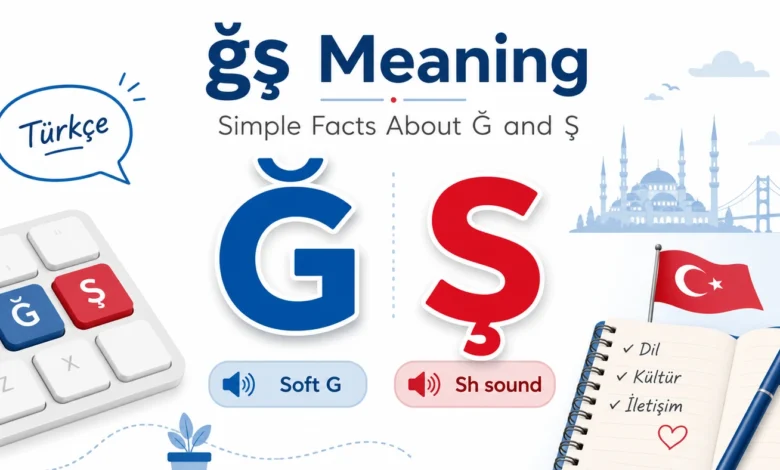
The term ğş may look unusual at first, especially for readers who use the English alphabet every day. It is short, simple, and easy to miss, but it points to two important letters used in Turkish writing: ğ and ş.
These letters are not random marks. They help show sounds and reading patterns that English letters cannot always show clearly. For Turkish learners, travelers, readers, and curious users, understanding them can make Turkish words feel much less confusing.
This guide explains ğş in simple English. You will learn what these letters mean, how they work, how to type them, and why they matter in names, places, words, and online text.
What Does ğş Mean?
The term ğş is best understood as a short combination of two Turkish letters. The first letter is ğ, called soft g in English. The second letter is ş, which sounds close to “sh” in English words like “shoe” or “ship.”
On its own, ğş is not usually used as a common Turkish word. It is more like a compact way to show two special letters together. People may look it up because the letters look unfamiliar on English keyboards.
So, the meaning depends on context. In most cases, it is connected to Turkish letters, Turkish pronunciation, typing special characters, or learning how the Turkish alphabet works.
Understanding the Letter Ğ
The letter ğ is one of the most interesting letters in Turkish. It is called “yumuşak g” in Turkish, which means soft g. Unlike the normal g, it does not sound like the g in “go” or “game.”
In many words, ğ makes the vowel before it longer or smoother. Sometimes it creates a soft glide between vowels. This is why English speakers often find it hard to hear at first.
A simple way to think about ğ is this: it changes the flow of a word more than it creates a strong sound. It is quiet, but it still matters because it changes how a word is read.
Understanding the Letter Ş
The letter ş is easier for many English speakers. It sounds like sh in “shop,” “short,” or “fresh.” The small mark under the letter is called a cedilla, and it changes s into a different sound.
Without the cedilla, s has a regular “s” sound. With the cedilla, ş has the softer “sh” sound. This small mark makes a big difference in Turkish spelling.
For example, a Turkish learner must treat s and ş as separate letters. Mixing them up can change how a word sounds and may also change its meaning.
Why Ğ and Ş Matter in Turkish
Turkish spelling is much more sound-based than English spelling. That means letters usually give strong clues about pronunciation. Because of that, each letter has an important job.
Both ğ and ş help Turkish writing match Turkish speech. They are not decorative marks or optional symbols. They are part of correct spelling.
This matters in daily life. You may see these letters in Turkish names, city names, food names, signs, maps, messages, and website text. Reading them correctly helps you understand the word more clearly.
Is ğş a Real Word?
In normal Turkish, ğş is not commonly used as a complete word by itself. It looks more like a letter pair or a typed symbol group. Still, people may use it online when asking about Turkish letters.
This kind of short term can appear when someone copies letters, tests a keyboard, studies a language, or checks how special characters display on a screen.
So, it is better to describe ğş as a letter combination, not as a regular everyday word. Its value comes from the two letters it contains.
How to Pronounce Ğ and Ş
The letter ş is simple to practice. Say the English sound “sh.” That is close enough for most beginners. Words with ş should not be read like plain s.
The letter ğ needs more patience. Do not pronounce it like a hard English g. Instead, let it soften the sound around it. Often, the vowel before it becomes longer or smoother.
A useful beginner rule is this: read ş as “sh,” and treat ğ as a soft helper letter. This rule is not perfect for every case, but it gives new learners a safe starting point.
How to Type ğş on a Keyboard
Typing ğ and ş depends on your device, keyboard layout, and language settings. On phones, you can often press and hold a letter to see special versions. For example, holding g or s may show extra choices.
On computers, adding a Turkish keyboard layout is often the easiest method. Once the layout is active, the Turkish letters become much easier to enter without copying and pasting.
Here is one simple way to handle it:
- On mobile, press and hold related letters to find Turkish options.
- On desktop, add Turkish as an input language in your system settings.
- For one-time use, copy ğ and ş from a trusted text source.
Common Words With Ğ and Ş
The best way to understand these letters is to notice them in real words. Turkish has many everyday words that include ğ or ş, so learners see them often.
For example, ş can appear in common words related to people, places, feelings, and daily speech. Because it sounds like “sh,” it is usually easy to recognize after a little practice.
The letter ğ appears in many Turkish words too, but it works more quietly. It may not jump out when spoken, yet it still changes the rhythm and spelling of the word.
Common Mistakes New Readers Make
One common mistake is reading ş as a normal s. This makes the word sound wrong. The small mark under the letter should never be ignored.
Another mistake is pronouncing ğ as a strong English g. This can make Turkish words sound heavy or unnatural. The letter is called soft g for a reason.
New readers may also remove the marks when typing. That can happen on English keyboards, but it is not ideal. Turkish words should keep their correct letters whenever possible.
Ğ and Ş in Names and Places
Many Turkish names and place names use letters like ğ and ş. If these marks are removed, the name may look different from its proper form.
This is important for travel, maps, passports, records, and online profiles. A small mark can help protect the correct spelling of a person’s name or a location.
For global readers, these letters are a reminder that different languages need different writing tools. English does not include every sound used around the world, so extra letters help fill that gap.
Why People Look Up ğş Online
Many people look up ğş because it looks strange on an English keyboard. They may wonder if it is a code, a word, a language sign, or a typing error.
Others may find it while reading Turkish text. When they see ğ and ş together or near each other, they want a quick explanation.
It can also appear in online forms, usernames, copied text, language lessons, and font tests. In all these cases, the main question is usually simple: what are these letters, and how should they be read?
Simple Tips for Learning These Letters
Start with ş because it is easier. Connect it with the English “sh” sound and practice it in short words. Once you remember that rule, the letter becomes much less confusing.
Then study ğ slowly. Listen to Turkish words that use it and notice how the sound flows. Do not force a hard g sound where it does not belong.
It also helps to keep the marks visible when writing. If you practice with the correct letters from the start, Turkish spelling will feel more natural over time.
Final Thoughts
The meaning of ğş is simple once you break it apart. It points to two special Turkish letters: ğ and ş. One is soft and often quiet, while the other sounds like “sh.”
These letters may look small, but they have real value. They help Turkish words sound and read correctly. They also protect the proper spelling of names, places, and everyday words.
For beginners, the best approach is not to worry too much. Learn ş as “sh,” treat ğ as a soft helper letter, and keep practicing. With time, both letters become easy to recognize and use.
Frequently Asked Questions (FAQs)
What does ğş mean?
ğş is best understood as a short combination of two Turkish letters, ğ and ş. It is not usually a common word by itself, but it is useful when learning Turkish spelling and pronunciation.
Is ğş a Turkish word?
No, ğş is not commonly used as a normal Turkish word. It is more often seen as a letter pair, a typing example, or a way to ask about the Turkish letters ğ and ş.
How do you pronounce ş?
The letter ş sounds like “sh” in English words such as “ship” or “shop.” It should not be read like a plain s, because the cedilla changes the sound.
How do you pronounce ğ?
The letter ğ is called soft g. It usually does not sound like the hard g in English. Instead, it often lengthens or softens the vowel before it.
Can I type ğş on an English keyboard?
Yes, you can type it by using a Turkish keyboard layout, holding letters on many mobile keyboards, or copying the characters when needed. Adding Turkish input settings is the best long-term option.
Why are Ğ and Ş important?
They are important because they are real letters in Turkish writing. Without them, words may be spelled incorrectly, names may lose their proper form, and pronunciation can become unclear.
Read More: Willowmagazine.co.uk