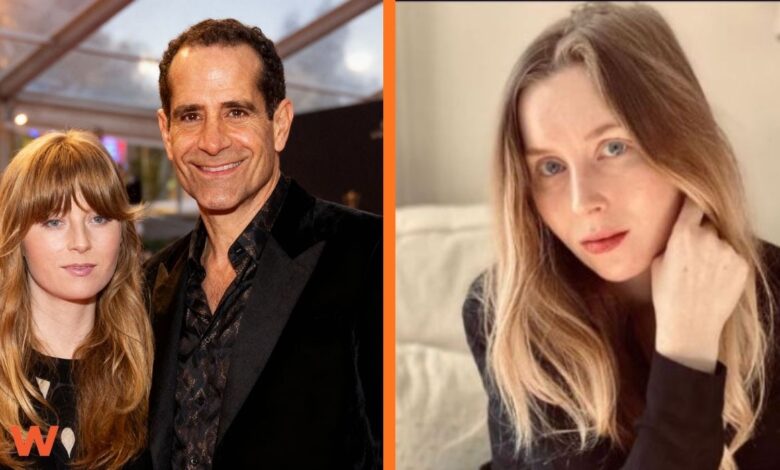
Josie Lynn Shalhoub is best known to many readers as the daughter of award-winning actor Tony Shalhoub, but that description only captures part of her story. Over time, she has built a creative identity of her own as a writer, producer, and founder of an independent production company, while also keeping much of her personal life relatively private. That balance between a recognizable family name and a quieter professional path is one reason interest in her has continued to grow. Recent attention has increased even more because she is now publicly connected to a major new family project: a book co-written with her father, centered on food, memory, heritage, and the Shalhoub family’s long-running summer reunion tradition.
What makes Josie Lynn Shalhoub especially interesting is that her public profile does not follow the usual celebrity-child pattern. Instead of relying mainly on red-carpet visibility or social-media fame, she has developed a body of work rooted in storytelling. Official author and personal-site information presents her as a writer and producer, the founder of House of Water, and a creative professional whose work spans film, TV, books, audio, and theater. Her writing has appeared in outlets such as McSweeney’s and Bon Appétit, and her formal training includes a BFA in Theatre from CalArts, along with additional culinary education.
The strongest newly relevant development is her collaboration with Tony Shalhoub on We Thought They’d Never Leave: Musings on Food & Family, scheduled for release on October 27, 2026 through Gallery Books. That project gives readers a clearer, more current window into Josie’s life and work than many older celebrity-family profiles do. It shows her not just as Tony Shalhoub’s daughter, but as an active co-creator helping shape a multigenerational family story into a publishable book.
Quick Information Table
| Data Point | Details |
|---|---|
| Full name | Josie Lynn Shalhoub |
| Professional name | Josie Adams |
Known forWriter, producer, and daughter of Tony ShalhoubFatherTony ShalhoubMotherBrooke Adams adopted Josie before marrying Tony Shalhoub; the family later raised her together.Adoption backgroundAdopted at birth from Omaha, NebraskaRaised inLos AngelesSiblingSophie ShalhoubEducationBFA in Theatre from CalArts; also has multiple culinary degreesOccupationWriter, producer, founder of House of WaterCompanyHouse of Water, an independent women-led production companyCurrent residenceNew JerseyMarital statusMarriedChildrenTwo childrenMajor 2026 projectCo-author of We Thought They’d Never Leave with Tony Shalhoub, releasing October 27, 2026
Who Is Josie Lynn Shalhoub?
Josie Lynn Shalhoub is a creative professional whose public identity combines family recognition with independent artistic work. While search interest often begins with the question of whether she is related to Tony Shalhoub, the fuller answer is that she belongs to a family deeply connected to the arts and has also pursued writing and production on her own terms. Official biographical material identifies her as Josie Adams, which appears to be the name she uses professionally in publishing and media spaces. That matters because many readers search for “Josie Lynn Shalhoub,” while newer professional references may appear under “Josie Adams.”
This distinction helps explain why some older web pages discuss her mostly as a celebrity daughter, while newer and more reliable sources show a broader career profile. In recent official descriptions, she is not introduced first as a socialite or television personality. Instead, she is described as a writer, producer, and founder, suggesting a long-term investment in content creation rather than passive fame. That framing is important for anyone trying to understand her life and work accurately today.
Early Life and Background
Josie’s early life is closely tied to adoption and family formation. According to her official biography, she was adopted at birth from Omaha, Nebraska, and raised in Los Angeles. Other reputable family profiles add that Brooke Adams adopted Josie in 1989, before or around the time Adams and Tony Shalhoub formalized their life together as a married couple in 1992. Tony later became her adoptive father within that family unit, and the couple went on to adopt a second daughter, Sophie Shalhoub, in 1994.
That background matters because it places Josie Lynn Shalhoub within a family structure shaped by both adoption and creative partnership. Tony Shalhoub and Brooke Adams have long been recognized as a notable acting couple, but the family story is not simply one of celebrity lineage. It is also a story of chosen family, blended identity, and a home life that appears to have valued both privacy and artistic expression. The new book project makes that even clearer by emphasizing memory, intergenerational storytelling, and shared traditions rather than only star power.
Education, Training, and Creative Development
One of the more substantive facts available about Josie Lynn Shalhoub is her education. On her official site, she states that she holds a BFA in Theatre from CalArts and has also earned multiple culinary degrees. She has attended both the Sewanee Writers’ Conference and the Yale Writers’ Conference, which helps explain the range of her work across literary writing, media development, and food-centered storytelling.
This educational mix is especially revealing because it connects several threads in her current career. Theater training often builds skills in narrative structure, performance awareness, and character, while culinary study can open a path toward food writing, hospitality storytelling, and culture-based memoir. In Josie’s case, those strands seem to meet naturally in her 2026 collaboration with Tony Shalhoub, which blends recipes, family history, and narrative reflection. Rather than looking like a sudden celebrity-side project, the book appears consistent with her existing interests and training.
Family: Tony Shalhoub, Brooke Adams, and Sophie Shalhoub
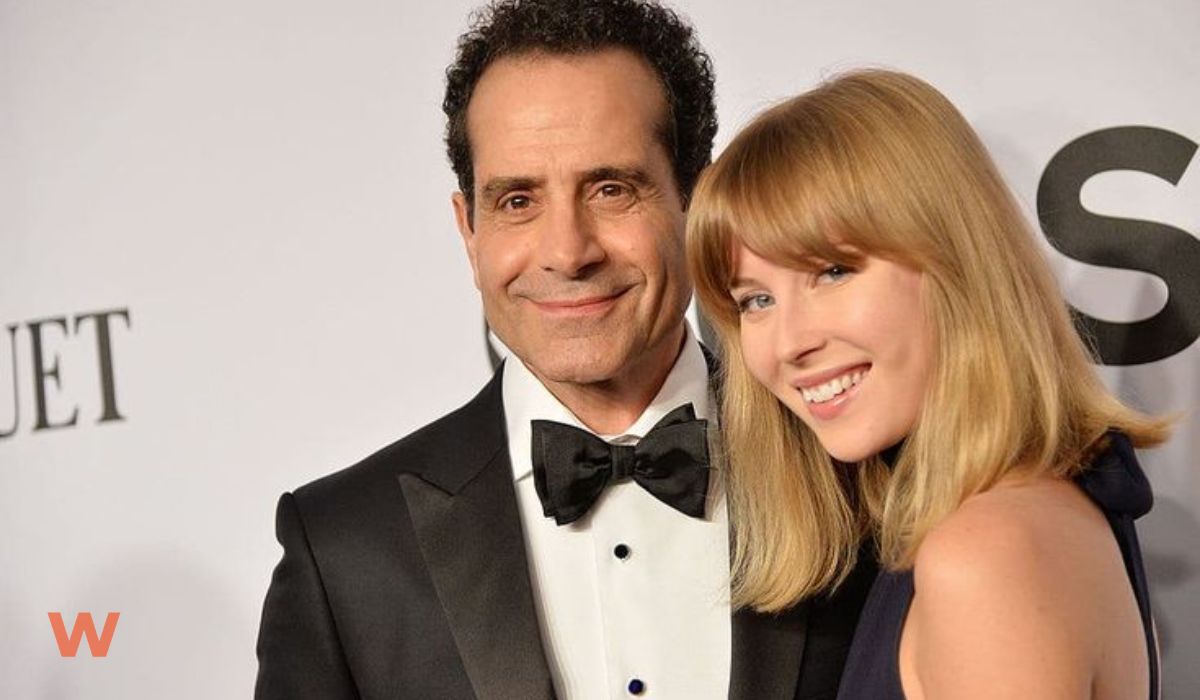
Any informative article about Josie Lynn Shalhoub also needs to explain her immediate family clearly. Her father, Tony Shalhoub, is one of the most respected actors of his generation, known widely for Monk, Wings, and The Marvelous Mrs. Maisel. Her mother, Brooke Adams, is an established actress with a long screen and stage career. Public profiles consistently note that the couple have two daughters, Josie and Sophie, both adopted.
For Josie, growing up in that household likely meant close exposure to professional storytelling, performance, and the discipline of creative work. At the same time, the family has generally not shared excessive private detail. Sophie Shalhoub is referenced publicly far less often than Tony or Brooke, and Josie herself seems to have chosen a career path that is public enough to be verifiable but private enough to avoid overexposure. That may be one reason why people keep searching for “who is Josie Lynn Shalhoub?”—there is real public interest, but relatively selective disclosure.
Life and Work Beyond a Famous Last Name
The strongest evidence about Josie Lynn Shalhoub’s professional identity comes from official author and biography pages. These describe her as the founder of House of Water, an independent, women-led production company focused on writing and development across film, TV, books, audio, and theater. That single fact is important because it places her in an entrepreneurial role, not just a contributor role. She is not merely attached to others’ projects; she is actively building a creative platform of her own.
Her writing credentials also show range. Official material says her work has appeared in McSweeney’s, Bon Appétit, and on Audible. She also spent roughly a decade working as a copywriter across tech, e-commerce, and publishing before leaving the corporate world. That background suggests a writer with both literary interests and practical commercial experience, which can be a powerful combination in modern media. It helps explain how she could contribute meaningfully to a book project that needs warmth, structure, audience awareness, and a market-ready voice.
The Newly Important 2026 Development: Her Book With Tony Shalhoub
The most newsworthy and newly informative angle in Josie Lynn Shalhoub’s story is her co-authored book with Tony Shalhoub, We Thought They’d Never Leave: Musings on Food & Family. Simon & Schuster describes it as a humorous and heartfelt portrait of place, family, and food, centered on the Shalhoub family’s annual summer reunion in Door County, Wisconsin. The book includes stories, memories, and around twenty recipes, while People reports that the project began as a cookbook and evolved into something closer to a family memoir.
This is significant for two reasons. First, it offers the clearest current proof that Josie is not simply adjacent to her father’s fame; she is collaborating with him as a credited co-writer. Second, the subject matter aligns closely with her own stated interests in food, writing, and family-centered storytelling. In media comments around the announcement, she described the collaboration as meaningful and noted that it gave her a chance to see her father in a new light. That personal and professional overlap makes the book one of the most important markers of her public career so far.
Marriage, Partner, Children, and Private Life
Unlike some celebrity-family figures, Josie Lynn Shalhoub does not appear to publicize every aspect of her home life. Still, her official biography confirms that she lives in New Jersey with her husband and two children. Reputable entertainment coverage from earlier years also reported that Tony Shalhoub and Brooke Adams became grandparents in 2020 when Josie welcomed her first child. Taken together, those sources support the conclusion that she is married, is a mother of two, and has built a family life outside the usual Hollywood spotlight.
That privacy is worth respecting. There is no strong need to force details that have not been publicly confirmed, especially regarding her husband’s identity or her children’s names. From an informative standpoint, the clearer and more responsible approach is to note what is verifiable: she is married, has children, lives in New Jersey, and appears to have chosen a lower-profile family life while maintaining a creative career.
Age, Net Worth, and What Is Not Publicly Confirmed
Readers often search for age and net worth, but these are areas where caution matters. A 2020 People report referred to Josie Lynn Shalhoub as 31 years old at that time, which would place her birth year around 1988 or 1989. Because that figure comes from a dated article rather than a current official biography, it is more careful to describe her as being born in the late 1980s rather than presenting a specific current age as absolute fact.
The same caution applies even more strongly to net worth. There is no reliable official or high-authority public source establishing Josie Lynn Shalhoub’s personal net worth. Since much online celebrity-finance content is speculative, the most trustworthy answer is that her independent financial profile is not publicly confirmed. What can be said with confidence is that she has developed a professional portfolio in writing, production, and publishing, and that her visibility is growing through verifiable projects rather than rumor-driven estimates.
Why Interest in Josie Lynn Shalhoub Is Growing
Interest in Josie Lynn Shalhoub is growing because she now occupies a more visible space between celebrity family history and independent authorship. Searchers arrive looking for Tony Shalhoub’s daughter, but they increasingly find a fuller creative profile: a woman adopted at birth, raised in Los Angeles, trained in theater and culinary arts, active as a writer and producer, married with children, and now co-authoring a major family book with her father. That is a richer and more current story than many older profile pages suggest.
Her story also resonates because it combines several appealing themes at once: family heritage, adoption, intergenerational collaboration, literary ambition, and a life lived partly in public and partly in privacy. In a media landscape full of oversharing, that kind of selective visibility can actually deepen curiosity. Josie Lynn Shalhoub is becoming more interesting not because she is constantly visible, but because the work now surfacing under her name feels substantive, personal, and grounded.
Final Thoughts
So, who is Josie Lynn Shalhoub? She is far more than a celebrity daughter. She is a writer, producer, founder, wife, mother, and creative collaborator whose public identity is gaining new depth in 2026. Her connection to Tony Shalhoub remains an important part of her story, but the emerging picture is one of an individual with her own voice, education, and creative direction.
The clearest takeaway is that Josie Lynn Shalhoub’s life and work are now easier to understand through verified, current sources than through rumor-based celebrity profiles. Her official biography and new book project provide a more trustworthy portrait: a woman shaped by family, education, writing, food culture, and thoughtful storytelling. For readers searching today, that is the most informative and up-to-date way to understand her place in both the Shalhoub family and her own growing professional career.
Frequently Asked Questions
1) Who is Josie Lynn Shalhoub?
Josie Lynn Shalhoub is a writer and producer who is also known as the daughter of actor Tony Shalhoub and actress Brooke Adams. In current professional contexts, she is often identified as Josie Adams, and official sources describe her as the founder of House of Water and a creative professional working across film, TV, books, audio, and theater.
2) Is Josie Lynn Shalhoub Tony Shalhoub’s biological daughter?
Public family profiles describe Josie as an adopted daughter. Brooke Adams adopted her in 1989, and Josie later became part of the family unit that Brooke Adams and Tony Shalhoub built together. Tony and Brooke later adopted a second daughter, Sophie.
3) What does Josie Lynn Shalhoub do for a living?
She works as a writer and producer. Official bios also say she founded House of Water, an independent women-led production company, and that her writing has appeared in McSweeney’s, Bon Appétit, and Audible projects.
4) What is the new project between Josie Lynn Shalhoub and Tony Shalhoub?
Josie and Tony Shalhoub have co-written We Thought They’d Never Leave: Musings on Food & Family, a book scheduled for release on October 27, 2026. It combines family stories, heritage, reunion memories, and recipes, with a strong focus on the Shalhoub family’s gatherings in Door County, Wisconsin.
5) Is Josie Lynn Shalhoub married?
Yes. Her official biography states that she lives in New Jersey with her husband and two children. However, detailed public information about her spouse is limited, and that part of her life appears intentionally private.
6) What is known about Josie Lynn Shalhoub’s education?
Her official site says she earned a BFA in Theatre from CalArts, attended the Sewanee Writers’ Conference and the Yale Writers’ Conference, and also holds multiple culinary degrees. These details help explain her blend of literary, production, and food-focused creative work.
7) What is Josie Lynn Shalhoub’s net worth?
There is no reliable, publicly confirmed source that establishes Josie Lynn Shalhoub’s personal net worth. The more accurate approach is to focus on verified career facts: she is an active writer, producer, founder, and now a credited co-author on a major 2026 book release.