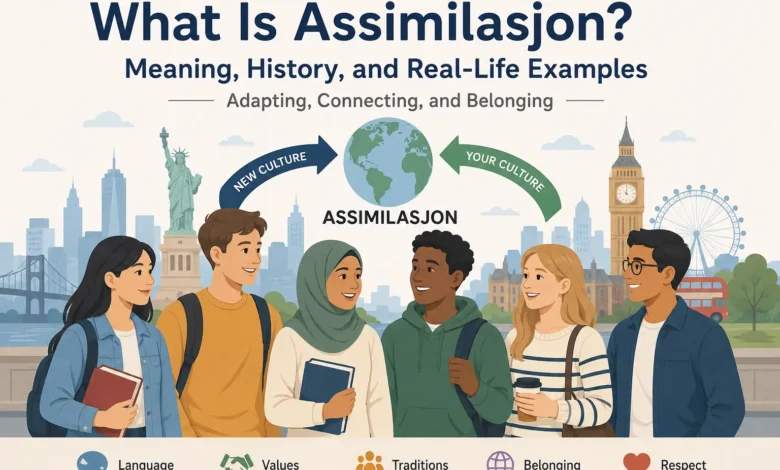
Assimilasjon is a Norwegian word that closely matches the English word “assimilation.” It describes a process where a person, group, sound, idea, or behavior becomes more similar to something around it. The exact meaning depends on the subject, but the central idea is simple: something adjusts, blends, or moves closer to another pattern.
People often meet this term in discussions about culture, migration, language, education, and history. It may describe how a newcomer adapts to a new country, how a speech sound changes in fast conversation, or how a person understands new information through what they already know. That wide use makes the topic important, but also easy to misunderstand.
The word can sound neutral, positive, or negative depending on the situation. Voluntary adaptation can help people communicate and belong. Forced change, however, can damage identity, language, family memory, and confidence. This is why Assimilasjon should be explained with care, not as a one-sided idea.
A good way to understand it is to ask who is changing, why the change is happening, and whether people have a real choice. When change happens with freedom and respect, it can support growth. When change happens through shame or pressure, it can leave lasting harm.
This article covers the meaning, background, main types, real-world examples, and modern importance of the term. It uses simple language so readers in the United States, the United Kingdom, and other parts of the world can understand the topic clearly.
What Does Assimilasjon Mean?
Assimilasjon means becoming more alike. In social life, it often refers to a minority group adopting the habits, language, values, or public behavior of a larger or more powerful group. This may happen through school, work, media, friendships, public services, and everyday community life.
In a cultural setting, it can include learning the main language of a country, following common social rules, changing dress styles, or adjusting family routines. These changes may happen slowly, often over years or generations. A person may not notice every small change, but the long-term effect can be clear.
In language, Assimilasjon can also describe a sound change. One sound may become more like a nearby sound because it is easier to pronounce that way. This happens naturally in daily speech, especially when people speak quickly and smoothly.
In learning, the term can mean fitting new information into an existing mental picture. For example, a child who knows what a dog is may first call every four-legged animal a dog. The child is using old knowledge to understand something new, even if that understanding later needs to grow.
Assimilasjon in Culture, Society, and History
Cultural Assimilasjon is often discussed when people move from one country or community to another. A newcomer may learn local customs, celebrate public holidays, follow workplace manners, and speak the main public language. These changes can make daily life easier and help people take part in society.
At the same time, cultural change can create tension. A person may want to succeed in a new country while also keeping family traditions. They may speak one language at home and another at school or work. This can lead to a rich mixed identity, but it can also make people feel pulled in two directions.
History shows that many countries once believed a strong nation needed one main language and one public culture. In the United States, the “melting pot” idea became a common way to describe how immigrant groups were expected to blend into a shared national life. In the United Kingdom and other countries, similar debates developed around language, belonging, citizenship, and public values.
These debates were not only about culture. They were also about jobs, schools, housing, public trust, and national identity. Some leaders saw shared habits as a path to unity, while critics warned that too much pressure could silence minority voices.
There are also painful historical examples. Some Indigenous communities around the world were pressured or forced to give up languages, names, spiritual practices, and family traditions. These cases show why the word can be sensitive. It may describe normal adaptation, but it can also describe the loss caused by unequal power.
Main Types of Assimilasjon
Assimilasjon appears in more than one area of life. The most common types are cultural, social, linguistic, and cognitive. Each type explains a different kind of change, but all of them involve one pattern becoming closer to another.
Here is a simple breakdown:
- Cultural Assimilasjon happens when people adopt customs, values, or public habits from a larger society.
- Linguistic Assimilasjon happens when speech sounds become more alike, or when people shift toward a dominant language.
- Cognitive Assimilasjon happens when new ideas are understood through old knowledge.
Social Assimilasjon is closely connected to cultural change. It can involve joining local groups, making friends outside one’s original community, attending shared institutions, and taking part in public life. This may help people feel included, but it can also reduce contact with older traditions if no effort is made to protect them.
These types often overlap. A family that moves to a new country may learn a new language, adjust to school rules, adopt new work habits, and develop new views about gender roles, time, privacy, or family life. At the same time, they may keep food, music, stories, faith practices, and memories from their original background.
Assimilasjon vs Integration
Assimilasjon and integration are related, but they are not the same. Assimilasjon often suggests that one group becomes more like the larger group. Integration usually suggests a two-way process where newcomers join society while society also makes space for them.
For example, a person who stops using their first language completely and only follows the dominant culture may be seen as moving toward full assimilation. A person who learns the public language but still keeps family traditions may be seen as integrated rather than fully assimilated.
This difference matters because many modern societies now value participation without total cultural loss. People can be active citizens, good neighbors, and successful workers while still keeping meaningful parts of their background. A healthy society does not need everyone to be exactly the same.
The difference also matters for policy, schools, and workplaces. A school that supports only one language may push students toward full assimilation. A school that teaches the public language while respecting home languages may support belonging in a more balanced way.
Real-Life Examples of Assimilasjon
A clear example appears in immigrant families. Parents may speak their original language at home, while children become more fluent in the language used at school. Over time, the children may prefer the school language because it helps them with friends, study, entertainment, and public life.
Another example involves names and pronunciation. Some people shorten their names, change the way they say them, or use a different public name because others find the original hard to pronounce. This may make daily life easier, but it can also feel like a quiet loss of personal meaning.
Assimilasjon also appears in food, clothing, holidays, and workplace behavior. A family may cook traditional meals at home but also adopt local meals and customs. A worker may adjust their tone, humor, body language, or communication style to fit office culture in the United States, the United Kingdom, Canada, Australia, or another country.
A language example can be heard in fast speech. When people speak naturally, sounds often influence nearby sounds. A word may sound slightly different in conversation than it does when spoken slowly. This kind of change is not usually planned; it is part of how speech becomes smoother.
Another everyday example is school life. A child may learn new classroom manners, sports, slang, lunch habits, and friendship rules. None of these changes alone may look big, but together they can shape how the child behaves in public and how they relate to family culture at home.
Benefits and Challenges
Assimilasjon can bring real benefits when it happens freely. Learning the main language of a country can open doors to education, jobs, friendships, healthcare, and public services. Understanding local rules and expectations can also reduce confusion in daily life.
It can also help people feel safer and more confident in new surroundings. When someone understands how a society works, they can ask for help, solve problems, and build connections more easily. For many families, adaptation is part of building a stable future.
Still, the process can bring challenges. People may feel caught between two worlds. Children may adapt faster than parents, which can create distance inside families. Older family members may worry that important traditions, stories, or values will disappear.
The biggest concern comes when Assimilasjon is forced. When people are pressured to reject their background, it can harm confidence, family connection, and cultural memory. Respectful adaptation should help people belong without making them feel ashamed of where they come from.
Why Assimilasjon Matters Today
Assimilasjon matters today because migration, global work, international study, online communities, and mixed families are part of modern life. People move for safety, education, marriage, careers, and opportunity. Every move brings questions about language, identity, belonging, and change.
It also matters because countries continue to debate how people should live together. Some people want a strong shared public culture. Others prefer a multicultural model where different traditions can exist side by side. Most real societies sit somewhere between these views.
For individuals, this topic is personal. It can affect how someone speaks, dresses, raises children, celebrates holidays, chooses a name, and sees themselves. A person may feel proud of adapting while also grieving parts of life that feel less visible than before.
Understanding Assimilasjon helps people talk about these choices with more care. It reminds us that adaptation is not only about fitting in. It is also about respect, memory, fairness, and the right to belong without being erased.
Final Thoughts
Assimilasjon is a powerful word because it describes change at many levels. It can happen in society, culture, language, and learning. Sometimes it is natural and useful. Sometimes it is shaped by pressure, power, or fear.
The healthiest form of adaptation gives people access to public life while still respecting their roots. A person should be able to learn a new language, join a new community, and succeed in a new country without being forced to erase their past.
In the end, Assimilasjon is not only about becoming similar. It is also about asking what should be protected during change. When people understand both sides of the topic, they can build communities that are more fair, open, and human.
Frequently Asked Questions (FAQs)
What is Assimilasjon in simple words?
Assimilasjon means becoming more like something around you. In society, it often means that a person or group adopts the language, habits, or public behavior of a larger culture.
Is Assimilasjon always negative?
No, it is not always negative. It can be helpful when people freely learn new customs or a new language, but it becomes harmful when people are pressured to hide or reject their identity.
What is the difference between Assimilasjon and integration?
Assimilasjon usually means becoming more like the dominant group. Integration means joining society while still keeping important parts of your original culture, language, or identity.
What is an example of Assimilasjon in language?
In speech, one sound can become more like a nearby sound because it is easier to say. This often happens in fast daily conversation without the speaker noticing it.
Why do immigrant families experience Assimilasjon?
Immigrant families experience it because they interact with schools, workplaces, public services, media, and local communities. Over time, these contacts can shape language use, habits, values, and social behavior.
Can a person assimilate and still keep their culture?
Yes, many people adapt to a new society while still keeping family traditions, food, language, beliefs, and memories. The result is often a blended identity rather than a complete loss of culture.
Read More: Willowmagazine.co.uk