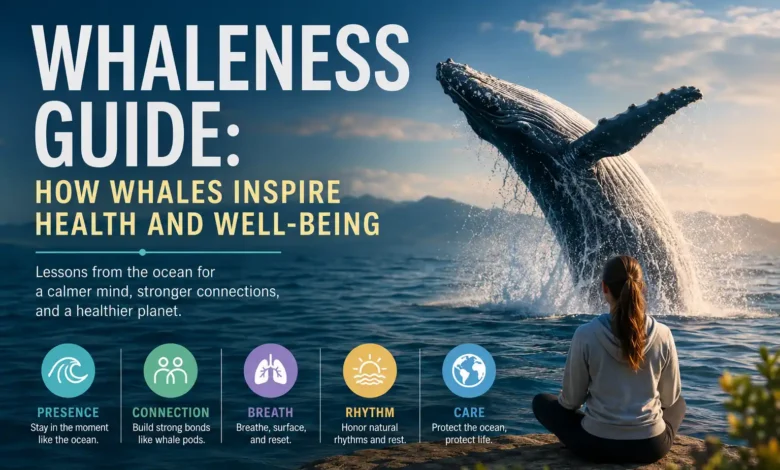
Whales have fascinated people for centuries. Their immense size, long journeys, complex sounds, and calm movement can make everyday worries feel smaller. A brief sighting from shore, a documentary, or even the sound of a whale song may create wonder and invite a person to slow down.
Whaleness is a modern way of describing the well-being lessons people can draw from whales and the ocean. It connects personal health with attention, community, emotional balance, and care for the natural world. The idea does not claim that whales can cure illness. Instead, it uses them as powerful reminders of how humans can live with more awareness and purpose.
This guide explains the meaning of Whaleness, the science-related ideas behind it, and simple ways to practice it. It also considers the needs of whales themselves, because human well-being should never come at the cost of wildlife.
What Is Whaleness?
Whaleness combines the image of whales with a broad view of wellness. It suggests that feeling well is not only about diet, exercise, or productivity. Well-being also grows through meaningful relationships, a sense of belonging, regular rest, contact with nature, and care for something larger than oneself.
The concept is best understood as a philosophy rather than a fixed program. Different people may use it in different ways. One person may connect it with calm breathing and ocean walks. Another may see it as a call to protect marine life, reduce waste, or spend more time listening to family and friends.
At its heart, Whaleness asks a simple question: what might change if people learned from the patience, connection, movement, and ecological role of whales? The answer is not to copy an animal literally. It is to notice useful patterns and apply them thoughtfully to human life.
Why Whales Create a Sense of Awe
Awe is the feeling that appears when we meet something so vast, beautiful, or surprising that it changes our sense of scale. Whales often create this response because their bodies, movements, and ocean home are far beyond ordinary human experience.
Awe can shift attention away from constant self-focus. For a moment, bills, deadlines, and social pressures may feel less dominant. This does not erase real problems, but it can create mental space. That pause may help a person return to daily life with a wider view.
Whales also challenge the belief that strength must be loud or aggressive. A huge animal surfacing gently can represent quiet power. This image can encourage confidence without force, patience without passivity, and respect without fear.
Blue Spaces and Mental Well-Being
Oceans, lakes, rivers, and other visible bodies of water are often called blue spaces. Research has linked contact with natural blue areas to positive mood, restoration, physical activity, and lower stress for many people. The results vary, and access is not equal, but the overall connection is promising.
Water can hold attention without demanding too much effort. Waves repeat but never look exactly the same. Light changes across the surface. Wind, birds, and distant movement create a gentle stream of sensory information. This can give an overloaded mind a chance to settle.
Whaleness places whales within this wider ocean setting. The benefit is not only the animal itself. It may come from the full experience: open views, fresh air, movement, curiosity, shared excitement, and a temporary break from screens and enclosed spaces.
The Lesson of Breathing and Presence
Whales are mammals, so they must return to the surface to breathe. Their visible exhalation is one of the most recognized sights in the ocean. For people, it can serve as a memorable symbol of pausing, breathing, and returning attention to the present.
Human breathing should not be forced to imitate a whale. A safer lesson is simply to notice it. Slow, comfortable breathing can support a calmer moment, especially when paired with relaxed shoulders and an unhurried pace. Anyone with breathing problems should follow professional medical advice.
Presence means paying attention to what is happening now instead of constantly replaying the past or predicting the future. A person can practice this near the sea, beside a river, in a park, or at home while listening to natural sounds.
Rest, Rhythm, and Energy
Modern life often treats constant activity as proof of value. Whales offer a different image. Their lives include movement, feeding, travel, social contact, surfacing, and periods of reduced activity. Nature works through changing rhythms rather than endless output.
This does not mean people should romanticize animal life or ignore responsibilities. It means energy is limited and recovery matters. A healthy routine makes room for focused effort and genuine rest. Sleep, quiet time, and breaks are basic needs, not rewards for exhaustion.
Whaleness encourages people to notice their own patterns. Some hours are better for demanding work, while others suit simple tasks. Respecting these natural changes may lead to steadier performance than pushing at full speed all day.
Social Bonds and the Value of Community
Many whale species have rich social lives. Mothers care for calves, individuals communicate, and groups may cooperate or maintain lasting relationships. Scientists continue to learn how complex these patterns can be across different species and populations.
The human lesson is not that every person must be highly social. It is that reliable connection supports well-being. A small circle of trustworthy people can be more helpful than a large number of shallow contacts. Care also moves in both directions: receiving support and offering it.
Community can include family, friends, neighbors, coworkers, cultural groups, and people joined by a shared cause. Whaleness invites people to ask whether their relationships provide safety, honesty, patience, and room to grow.
Migration, Change, and Resilience
Some whales travel thousands of miles between feeding and breeding areas. These journeys depend on timing, stored energy, learned routes, and changing ocean conditions. Migration offers a strong image of movement with purpose.
Human change is rarely as direct as a line on a map. Careers shift, families change, health needs develop, and plans fail. Resilience is not pretending that change is easy. It is the ability to adapt while keeping hold of important values and support.
A whale-inspired view of resilience includes pacing. Long journeys are completed through continued movement, not one dramatic burst. Small actions repeated over time can carry a person through study, recovery, grief, or a difficult transition.
Whale Sound, Silence, and Deep Listening
Whales use sound in many ways, including contact, navigation, courtship, and group behavior. Their calls can travel through water across great distances. Different species produce different types of clicks, pulses, whistles, and songs.
For people, whale communication is a reminder that listening is more than waiting for a turn to speak. Deep listening involves attention to words, tone, pauses, and emotion. It also requires enough silence for another person to finish a thought.
Silence can feel uncomfortable in a culture filled with alerts and entertainment. Yet a few quiet minutes can reveal tiredness, worry, gratitude, or ideas that noise has covered. Whaleness treats quiet as useful space rather than emptiness.
Whales, Ocean Health, and Planetary Well-Being
Whales are part of living ocean systems. As they feed, move, and release waste, they help transport nutrients through marine environments. Those nutrients can support tiny ocean organisms that form the base of food webs and take part in the planet’s carbon cycle.
Large whales also store carbon in their bodies during their lives. Their full environmental role is still being studied, and it should not be reduced to one simple number. Even so, evidence shows that healthy whale populations contribute to functioning marine ecosystems.
This creates an important principle: personal well-being and environmental health are connected. Clean water, stable climates, healthy wildlife, and safe public access to nature support human communities. Protecting whales is therefore more than an emotional cause; it is part of caring for shared life-support systems.
Responsible Whale Watching
Seeing a whale in the wild can be unforgettable, but the animal’s safety must come first. Boats that move too close, block travel paths, chase animals, or create heavy noise can disturb natural behavior. Rules differ by country and species, so responsible operators follow local limits and accepted guidance.
Before booking a trip, look for trained guides, clear distance rules, small-group practices where possible, and honest statements that sightings are never guaranteed. Avoid tours that promise touching, feeding, swimming with, or pursuing wild whales.
Land-based watching is often an excellent choice. Headlands, coastal paths, observation centers, and quiet beaches can provide wide views with less disturbance. Binoculars can improve the experience while allowing wildlife to remain wild.
How to Practice Whaleness in Daily Life
A person does not need to live near the coast or take an expensive trip. The core ideas can be practiced through attention, rest, connection, learning, and responsible action. Small habits are often easier to maintain than a major lifestyle change.
Try one or two actions that fit your circumstances:
- Take a slow walk near safe water or another natural area.
- Watch a trusted whale documentary without using a second screen.
- Spend five quiet minutes noticing comfortable, natural breathing.
- Contact someone you trust and listen without rushing the conversation.
- Reduce single-use waste and support practical marine protection in your community.
The aim is not perfection. Choose actions that feel realistic, observe how they affect your mood and attention, and adjust them over time. A simple practice becomes meaningful when it is repeated with care.
Using Whaleness Without Romanticizing Whales
Whales are not human therapists, symbols created for our use, or perfect models of peaceful life. They are wild animals with their own needs, behaviors, competition, risks, and survival pressures. Respect begins with allowing them to be more than an inspiring image.
It is also important to separate general well-being practices from health care. Time in nature, calming media, and mindful breathing may support some people, but they do not replace treatment for depression, anxiety, trauma, breathing disorders, or other conditions.
A balanced approach welcomes wonder while keeping expectations realistic. Whaleness can encourage reflection and healthy choices. It should not be presented as a cure, a scientific diagnosis, or a reason to delay professional support.
Final Thoughts
Whaleness is a simple but meaningful idea. It uses the wonder of whales to encourage calm attention, healthy rhythms, strong relationships, resilience, and respect for the ocean. Its value comes from reflection and action, not from making exaggerated promises.
Whales can remind us that great strength may move gently, long journeys require pacing, and individual life depends on wider systems. They can also show why wonder and responsibility belong together. Admiring wildlife has greater meaning when it leads to safer choices for that wildlife.
You can begin wherever you are. Pause, breathe comfortably, listen well, notice nature, and care for the people and places around you. These small acts capture the most useful spirit of Whaleness.
Frequently Asked Questions (FAQs)
What does Whaleness mean in simple terms?
Whaleness is a well-being philosophy inspired by whales and the ocean. It encourages calm attention, meaningful connection, balanced routines, wonder, and care for nature.
Is Whaleness a medical treatment?
No. It may support reflection and healthy everyday habits, but it does not diagnose, prevent, or cure illness. Medical or mental health concerns should be discussed with a qualified professional.
Can I practice Whaleness if I live far from the ocean?
Yes. You can connect with the idea through local rivers, lakes, parks, nature films, whale sounds, reading, art, quiet reflection, and environmental action.
Why do whales make people feel calm?
Their slow-looking movement, vast ocean setting, sounds, and scale can hold attention and create awe. Responses differ, so not everyone will experience the same feeling.
Is whale watching good for well-being?
It can be joyful, social, educational, and deeply memorable. Choose a responsible operator, follow safety guidance, and remember that wildlife sightings can never be guaranteed.
How can Whaleness help the environment?
It can turn appreciation into practical care. People may reduce waste, learn about marine threats, choose responsible wildlife tourism, join local cleanups, or support evidence-based conservtion.
Read More: Willowmagazine.co.uk