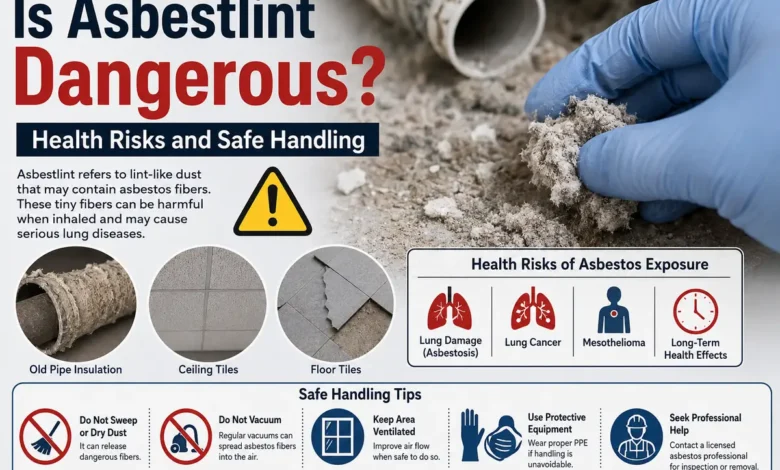
Asbestlint can sound like a strange or unclear word, but the idea behind it is serious. People usually use it to describe lint-like dust or fine debris that may contain asbestos fibers.
The danger does not come from the name itself. The real concern is whether the dust is linked to damaged asbestos-containing material and whether tiny fibers can move into the air.
This guide explains the risks in simple words. It also covers safe handling, testing, cleaning, and the right steps to take before touching suspicious dust in a home, workplace, garage, attic, or old building.
If you are unsure about a dusty area, the safest answer is not to guess. A careful pause can protect your lungs, your family, and anyone who may work in the same space later.
Table of Contents
ToggleWhat Does Asbestlint Mean?
Asbestlint is best understood as a plain-language term for soft, dusty, or lint-like material that may be mixed with asbestos. It is not a special safe material or a harmless type of household dust.
In many cases, the word may point to loose fibers, old insulation debris, dust from damaged building products, or contaminated lint collected around vents, pipes, ceilings, flooring, or storage spaces.
Because you cannot confirm asbestos by sight alone, the safest approach is caution. If dusty material appears near old insulation, broken tiles, textured coatings, or pipe lagging, do not treat it like normal dirt.
The term is useful because it helps people picture the problem. Asbestos fibers can mix with ordinary dust and look soft, light, and easy to wipe away, even when they need careful control.
Why Asbestlint Can Be Dangerous
Asbestlint may be dangerous when it contains asbestos fibers and those fibers become airborne. These fibers can be very small, so a room can look clean while the air still carries a hidden risk.
Asbestos is most harmful when it is breathed into the lungs. Once fibers enter the body, they may stay there for many years and cause damage slowly over time.
The risk is higher when material is dry, crumbly, broken, scraped, drilled, sanded, swept, or vacuumed. Any action that shakes or spreads dust can make a small problem much larger.
This is why careful handling matters even when the amount looks small. A little dust on a shelf, beam, pipe, or floor edge can spread if someone uses the wrong cleaning method.
Where Asbestlint May Appear
Suspicious lint-like dust may appear in older buildings, especially where materials have aged, cracked, or been disturbed. Homes, schools, factories, offices, and workshops can all have hidden asbestos-containing products.
Common places include attics, basements, boiler rooms, ceiling voids, around old pipes, behind wall panels, under old flooring, and near heating or ventilation systems.
It may also appear after repair work, leaks, storms, ceiling damage, or careless renovation. When old material breaks apart, dust can settle on shelves, beams, floor edges, stored boxes, and fabric surfaces.
Areas with poor airflow can hold dust for a long time. A space that has not been opened for years may still contain settled material from older damage or maintenance work.
Common Materials Linked to Asbestos Dust
Older construction materials are the main concern. Asbestos was widely used because it resisted heat, fire, wear, and chemical damage, which made it useful in many building products.
Possible sources include pipe insulation, sprayed coatings, ceiling tiles, floor tiles, textured paint, roofing sheets, cement boards, gaskets, furnace parts, and some old adhesives or backing materials.
The exact risk depends on the product, age, condition, and whether it is being disturbed. A sealed and undamaged material is usually less risky than a friable material that crumbles under light pressure.
Some products release fibers more easily than others. Soft insulation and damaged sprayed coatings usually deserve more caution than hard material that is sealed, intact, and not being worked on.
Health Risks of Breathing Asbestos Fibers
The main health concern is long-term disease after inhalation. Asbestos exposure is linked with serious conditions such as asbestosis, lung cancer, and mesothelioma.
These illnesses often take many years to develop. That delay can make asbestos feel less urgent, but it is one reason safe handling matters so much today.
Not every exposure will cause disease, but no one should treat exposure as acceptable. The safest goal is to prevent fibers from entering the air and to reduce contact as much as possible.
Smoking can make lung-related risks worse for people who have been exposed to asbestos. This makes prevention, medical awareness, and early advice even more important for at-risk workers.
Signs That a Material Needs Attention
You may need expert advice if old material is torn, cracked, frayed, powdery, water-damaged, or falling apart. Dust near damaged insulation or ceiling material should be treated with care.
Warning signs can also include loose white, gray, brown, or fibrous debris around pipes, ducts, heaters, floor edges, or panels. However, color alone cannot prove whether asbestos is present.
If a renovation has recently happened and new dust appears in an older building, stop and think before cleaning. The safest first step is to avoid disturbing the area further.
Pay attention to hidden spaces too. A clean living room may still be affected if dust is coming from a ceiling void, loft hatch, service shaft, or old duct opening.
What to Do If You Find Suspicious Dust
If you find Asbestlint or any dust that may contain asbestos, stay calm and avoid touching it. Panic can lead to rushed cleaning, which may spread fibers through the room.
Use these basic safety steps:
- Stop work and keep people away from the area.
- Do not sweep, dry dust, drill, scrape, or sand the material.
- Turn off fans or air movement if it is safe to do so.
- Contact a qualified asbestos inspector or local safety professional.
Keep children, pets, workers, and visitors away until the material has been checked. If dust is on clothing, avoid shaking it indoors, because that may move particles into breathing space.
If the dust is in a workplace, tell the person responsible for safety before work continues. Clear communication helps stop another person from unknowingly disturbing the same area.
Safe Handling Rules for Homes and Workplaces
Safe handling starts with one clear rule: do not disturb material that may contain asbestos. Leaving it alone is often safer than trying to remove it without the right tools and training.
In a workplace, managers should follow local asbestos rules, keep records of known asbestos materials, and warn workers before repair or maintenance begins. Good planning prevents accidental exposure.
At home, avoid do-it-yourself removal unless your local law clearly allows it and you fully understand the process. Even then, professional help is usually the safer choice for dusty or damaged material.
Protective masks from a hardware store are not a full safety plan. Asbestos work may require controlled access, proper sealing, special equipment, safe waste handling, and trained supervision.
Testing and Professional Inspection
Testing is the only reliable way to know whether suspicious dust or material contains asbestos. A trained inspector can take samples without spreading fibers through the air.
Professional inspection is especially important before remodeling, demolition, drilling, sanding, or pulling up old materials. A small test before work begins can prevent a much larger contamination problem later.
Do not rely on online pictures or guesses. Many asbestos-containing products look like ordinary building materials, and many harmless materials can look worrying to the untrained eye.
A good inspection can also tell you whether removal is needed or whether the material can be managed in place. This decision should be based on condition, location, and likely disturbance.
Cleaning, Removal, and Disposal
Cleaning asbestos dust is not the same as cleaning normal dust. Dry sweeping, dry dusting, and ordinary vacuuming can push fibers back into the air and spread contamination.
When asbestos is confirmed or strongly suspected, cleaning should be done using controlled methods. Trained workers may use wet wiping, sealed waste handling, protective equipment, and special filtered equipment.
Disposal also matters. Asbestos waste usually needs to be sealed, labeled, transported, and handled according to local rules. Throwing it into regular trash can create risk for cleaners, neighbors, and waste workers.
Removal may not always be the first choice. If the material is stable and unlikely to be disturbed, sealing, monitoring, or leaving it in place may be safer than unnecessary removal.
How to Reduce Future Risk
The best prevention is to know where older asbestos-containing materials may exist before work starts. This is important for homeowners, landlords, buyers, renters, contractors, and maintenance teams.
Keep old materials in good condition when they are not being removed. Protect them from impact, leaks, vibration, and careless storage, because damage can turn a stable material into a dust problem.
Before any renovation, ask whether the building age and material type create concern. A simple inspection can protect indoor air, reduce cleanup costs, and prevent stressful surprises.
Good records are also helpful. If testing confirms asbestos in one area, keep that information available so future repairs, sales, rentals, or upgrades can be planned safely.
Final Thoughts
Asbestlint should be treated as a warning sign, not as ordinary lint. The real issue is whether the dust is connected to asbestos-containing material and whether fibers may be airborne.
The safest response is simple: do not disturb suspicious dust, keep people away, avoid normal cleaning methods, and arrange proper testing when needed. Guessing is not worth the risk.
With careful action, the danger can be managed. Good inspection, safe handling, and professional removal help protect health while keeping homes and workplaces cleaner and safer.
The most important habit is caution before contact. When a material is old, dusty, damaged, or unknown, pausing for expert advice is usually faster and safer than cleaning first and worrying later.
Frequently Asked Questions (FAQs)
Asbestlint can raise many questions because it looks like a small dust issue but may point to a deeper building safety concern. The answers below keep the guidance practical and easy to follow.
When in doubt, treat suspicious dust as something that needs checking, not something to brush aside. That simple mindset can prevent unnecessary exposure.
Is Asbestlint the same as asbestos?
Asbestlint is not a formal material name. It usually describes lint-like dust or loose debris that may be contaminated with asbestos fibers.
The danger depends on whether asbestos is actually present and whether the material has been disturbed. Testing is the only reliable way to confirm it.
Can I clean Asbestlint with a normal vacuum?
No, a normal vacuum should not be used on dust that may contain asbestos. It can blow tiny fibers back into the air and spread them to other areas.
If asbestos is suspected, avoid cleaning it yourself and keep the area still. A trained professional can choose safer cleaning and disposal methods.
Is one small exposure always dangerous?
A single small exposure does not always lead to disease, but it should still be taken seriously. Asbestos-related illness depends on many factors, including fiber amount, time, and repeat exposure.
The best approach is prevention. Any avoidable exposure should be reduced because asbestos fibers can remain in the body for a long time.
Where is Asbestlint most likely to appear?
It is more likely in older buildings where insulation, tiles, coatings, boards, or pipe materials have aged or been damaged. Attics, basements, boiler rooms, and renovation areas deserve extra caution.
Dust near broken building material should not be cleaned like regular dust. Keep it undisturbed until it has been checked.
Should I remove asbestos material myself?
In most cases, professional removal is safer than doing it yourself. The wrong method can release fibers and spread contamination beyond the original area.
Local rules may also limit who can remove asbestos and how waste must be handled. Always check the rules in your area before taking action.
When should I call a professional?
Call a professional when material is damaged, dusty, crumbly, or likely to be disturbed by repair or renovation. You should also call before major work in an older building.
A professional can inspect, test, explain the risk, and recommend the safest next step. This protects your health and avoids unsafe cleanup mistakes.
Read More: Willowmagazine.co.uk
 Admin
Send an email
May 28, 2026
Admin
Send an email
May 28, 2026